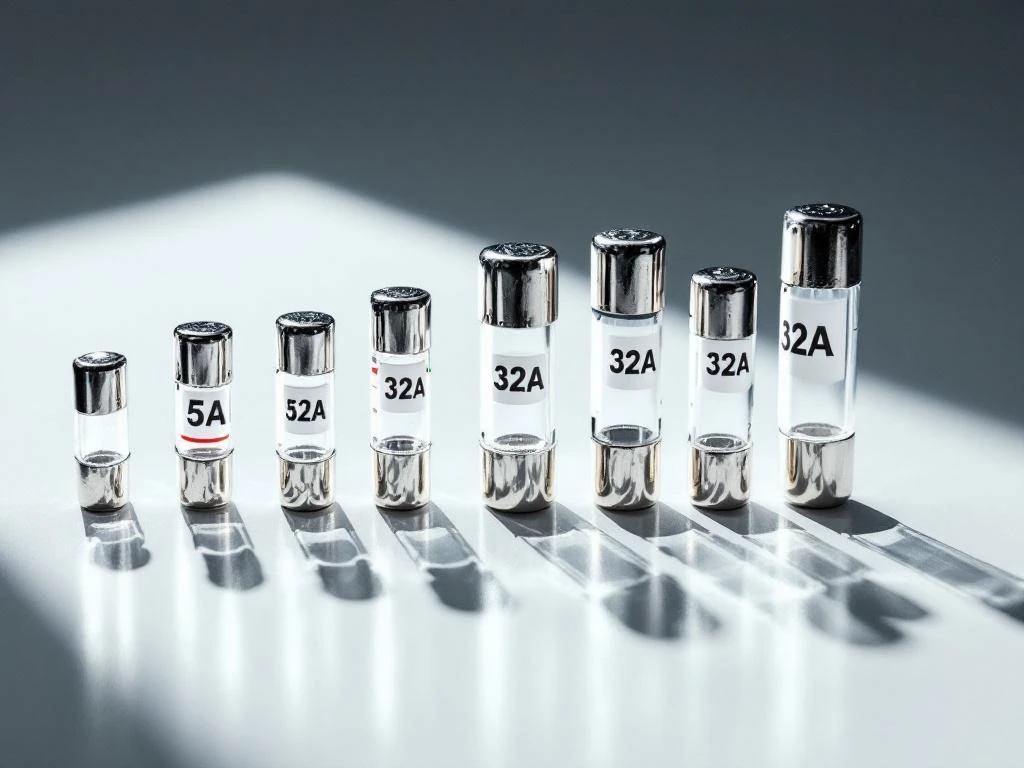
Fuse ratings indicate how much current can pass through a fuse before it blows. The rating is measured in amperes (A) and is clearly marked on each fuse, along with color codes that make identification easier. Common fuse sizes in Swedish homes are 10A, 16A, and 20A, with each size protecting different types of electrical appliances and circuits in your home.
What do the numbers on fuses mean, and how do you read them?
The numbers on fuses indicate the ampere rating, which specifies the maximum current the fuse can handle before it blows. A 16A fuse can handle up to 16 amps of continuous current. When the current exceeds this value, the fuse breaks the circuit to protect wires and appliances from overheating.
You’ll find the ampere rating printed directly on the front of the fuse, often along with the manufacturer’s name and other technical specifications. Modern circuit breakers also feature color codes that make identification easier—for example, 16A fuses are often blue and 20A fuses are yellow.
When reading fuse markings, you will also see letters such as B, C, or D. These indicate the trip characteristic—B-type fuses are most common in homes and trip at 3–5 times the rated current, while C-type fuses can withstand higher inrush currents and are used for motors and appliances with high inrush currents.
What are the most common fuse sizes in Swedish homes?
10A, 16A, and 20A are the most common fuse sizes in Swedish homes. 10A fuses are mainly used for lighting circuits and smaller outlets, 16A fuses for standard electrical outlets in living rooms and bedrooms, while 20A fuses protect kitchens and bathrooms where power-hungry appliances are used.
Lighting circuits almost always use 10A fuses because incandescent bulbs and LED lights draw relatively little current. These fuses can handle about 2,300 watts continuously, which is enough for many lights on the same circuit.
16A fuses are standard for regular electrical outlets and can handle about 3,680 watts. They are used for TVs, computers, vacuum cleaners, and other household appliances. In kitchens and bathrooms, 20A fuses are often used, which handle up to 4,600 watts—perfect for microwaves, coffee makers, hair dryers, and other high-power appliances.
Some special circuits may have 25-amp or 32-amp fuses for stoves, heat pumps, or electric radiators, but these are less common in typical homes.
How do you know what fuse size is needed for different appliances?
The correct fuse size is calculated by dividing the appliance’s power in watts by the voltage (230 V in Sweden). A 2300 W microwave draws 10 amps (2300 ÷ 230 = 10 A), so a 16 A fuse provides an adequate safety margin. Always choose the next larger standard size to avoid unnecessary tripping.
Check the appliance’s rating plate or manual for the exact power consumption. Also keep in mind that multiple appliances may be used simultaneously on the same circuit. If you have three appliances that together draw 12 amps, you’ll need at least a 16-amp fuse, but a 20-amp fuse provides a better safety margin.
Keep in mind that some appliances have a high inrush current—refrigerators and freezers can draw twice as much current when starting up compared to normal operation. Motors and compressors often require C-rated fuses instead of standard B-rated fuses to handle the inrush current without tripping.
Installation regulations also require that the wire gauge match the fuse rating. 1.5 mm² wires are used with 10A fuses, 2.5 mm² with 16A fuses, and 4 mm² with 20A fuses to ensure that the wire does not overheat.
What happens if you use the wrong fuse size?
Using the wrong fuse size creates serious safety risks. Fuses that are too large do not protect circuits from overheating, which can cause a fire. Fuses that are too small trip unnecessarily and cause frustration without improving safety. Both situations can also damage electrical appliances.
If the fuse is too large, wires can overheat without the fuse tripping. A 2.5 mm² wire protected by a 25-amp fuse instead of the correct 16-amp fuse can become dangerously hot when overloaded. Overheated wires are a common cause of fires in homes.
Fuses that are too small cause frequent tripping when standard appliances are used. A 10-amp fuse on a kitchen circuit will trip when you use a microwave and a kettle at the same time, even though this is perfectly normal. Repeated tripping can also damage the circuit breaker.
Using the wrong fuse size can also affect the lifespan of equipment. Constant voltage fluctuations caused by fuses tripping can damage electronics, while insufficient protection against overloads can permanently burn out motors and other components.
How we assist with circuit breaker installations and electrical safety
At 24 Center, we offer professional electrical services for circuit breaker installations and electrical safety around the clock. Our qualified electricians handle everything from emergency circuit breaker replacements to complete circuit breaker panel upgrades and safety inspections.
Our electrical services include:
- Emergency fuse replacements and troubleshooting of blown fuses
- Upgrading old fuse boxes to modern circuit breakers
- Sizing and installation of the correct fuse sizes
- Electrical safety inspections and checks of existing installations
- Installation of ground fault circuit interrupters and surge protectors
- Repair of circuit breakers and fuse boxes
Our technicians have extensive knowledge of Swedish electrical installations and local building conditions. We use only approved components and follow all applicable safety regulations to ensure your family’s safety.
Kontakta oss på 020 74 24 70 för omedelbar hjälp med säkringsproblem eller boka online för planerade elinstallationer. Vi finns tillgängliga dygnet runt och kommer snabbt ut för att lösa dina elsäkerhetsbehov.
Frequently asked questions
Can I replace the fuse myself, or does an electrician have to do it?
You can replace a blown circuit breaker yourself if you have the necessary knowledge and tools, but we strongly recommend that you have a qualified electrician do the job. Installation errors can cause fires or electrical accidents. If the circuit breaker trips repeatedly, an electrician should always investigate the cause.
Why does my circuit breaker keep tripping even though I'm not using many appliances?
Recurring power outages can be caused by several factors: a faulty circuit breaker, a hidden short circuit, moisture damage in the wiring, or an undersized fuse. They can also be caused by inrush currents from refrigerators or motors. Have an electrician inspect the problem to identify the root cause.
How often do circuit breakers need to be replaced?
Modern circuit breakers typically last 15–20 years under normal use. Replace them sooner if they trip for no apparent reason, cannot be reset, show signs of overheating, or if the circuit breaker panel dates from the 1980s or earlier. A regular inspection by an electrician is recommended every 5–10 years.
What should I do if the fuse won't reset after tripping?
Do not try to force the fuse back in. This often indicates a serious fault, such as a short circuit or a ground fault. Unplug all appliances on the circuit, and then try again. If the fuse still won’t reset, contact an electrician immediately—it can be dangerous to continue using the circuit.
Can I use a larger fuse temporarily if I don't have the right size at home?
No, never use a fuse that is larger than the one specified for the circuit. This can cause a fire because the wires are not protected against overheating. Buy the correct size at your nearest electrical supply store or contact an electrician. It is better to be without power temporarily than to risk a fire.
Do I need to upgrade my fuse box when I renovate the kitchen?
When renovating your kitchen, you should often upgrade the electrical panel, especially if it is more than 20 years old. Modern kitchens have more energy-intensive appliances that require separate circuits and ground fault circuit interrupters. An electrician can assess whether the existing panel can handle the new loads or if an upgrade is needed.