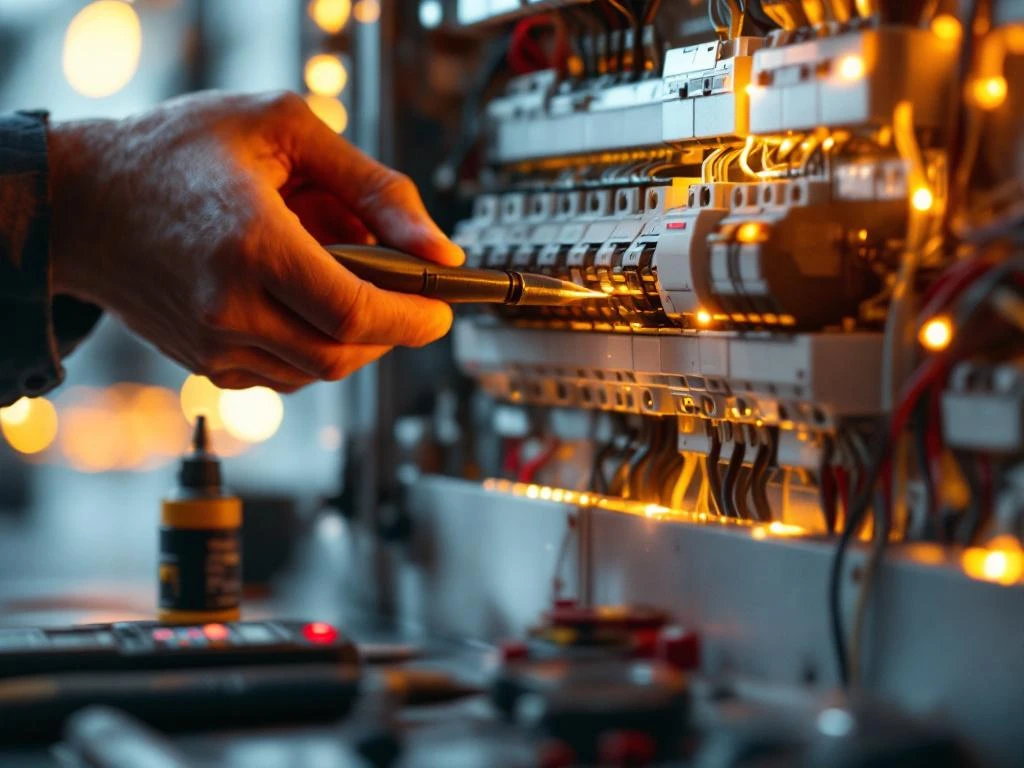
Replacing fuses usually takes between 5 and 30 minutes, depending on the type of fuse and complexity. Simple screw-in fuses can be replaced in 5–10 minutes, while automatic fuses take 10–15 minutes and earth fault circuit breakers can take 15–30 minutes. The time required is affected by the age of the electrical installation, accessibility to the fuse box, and whether troubleshooting is required.
What affects the timing of replacing fuses?
The time required to replace a fuse is determined by several important factors that vary depending on the situation. The type of fuse plays the biggest role—simple screw-in fuses can be replaced quickly, while modern automatic fuses require more time for proper installation.
The age of the electrical installation has a significant impact on the working time. Older fuse boxes from the 1960s and 70s can have complicated connections and require extra caution. Modern electrical distribution boards are designed for easier maintenance and are quicker to work with.
Accessibility to the fuse box is also important. Cabinets located in confined spaces, high up on walls, or behind furniture take longer to access. Safety requirements mean that the power must be turned off completely, which can prolong the process.
The complexity varies between simple fuse replacements and more advanced electrical work. If the problem requires troubleshooting circuits or checking fuse diagrams, the time can double or more.
How long does it take to replace different types of fuses?
Different types of fuses require different amounts of time to replace, depending on their design and installation method. Standard screw-in fuses are the quickest to replace, usually taking 5–10 minutes, including power shutdown and safety checks.
Automatic fuses take 10–15 minutes because they require correct connection of wires and verification that the switch is working properly. These fuses often have more complicated connections than traditional screw-in fuses.
Ground fault circuit interrupters are the most time-consuming, taking 15–30 minutes. They require careful installation and extensive functional testing to ensure proper ground fault protection. Troubleshooting why the original fuse tripped can add an additional 15–45 minutes.
Complex fuse systems with multiple circuits or special functions can take up to an hour, especially if fuse diagrams are missing or unclear. Safety checks after installation always take an extra 5–10 minutes, regardless of the type of fuse.
When do you need professional help with safety work?
Professional assistance is required when fuse replacement work goes beyond a basic replacement of defective fuses. Complex faults such as repeated fuse blowouts, sparks from the fuse box, or a burning smell require immediate professional assessment.
Old electrical installations from before the 1980s should always be handled by authorized electricians. These systems may have outdated safety standards and require special knowledge for safe handling.
Safety issues arise when you lack knowledge about which fuse controls which circuits or when fuse diagrams are completely missing. Incorrect installation can cause fires or electrical accidents.
Repeated circuit breaker trips indicate underlying electrical problems such as overloading, short circuits, or faulty appliances. These situations require systematic troubleshooting that should only be performed by qualified electricians.
Authorized electricians are also required for all work affecting main fuses, installation of new circuits, or upgrading fuse systems to modern automatic fuses.
How 24 Center assists with security work
We offer professional electrical services for all types of fuse work, from simple fuse replacements to complex troubleshooting of electrical installations. Our qualified electricians handle both urgent fuse problems and planned upgrades of safety technology.
Our services in the field of security include:
- Emergency fuse service – quick help when fuses blow and the power goes out
- Professional fuse replacement of all types – from screw fuses to earth fault circuit breakers
- Systematic troubleshooting of electrical installations in the event of repeated fuse failures
- Safety upgrades with modern automatic circuit breakers and protection systems
- Installation of electrical security systems and access control
With our 24/7 availability and quick response time, you'll get help when you need it most. Our electricians have deep knowledge of local building conditions and can quickly identify and solve fuse problems.
Kontakta oss på 020 74 24 70 för omedelbar hjälp med säkringsarbete, eller boka online för planerade elinstallationer och säkerhetsuppgraderingar.
Frequently asked questions
What should I do if the fuse blows again immediately after I replace it?
If a new fuse blows immediately, this indicates an underlying problem such as a short circuit or overload. Turn off all appliances on the circuit and contact an electrician—do not continue to replace fuses as this can be dangerous and cause a fire.
Can I replace a screw fuse with an automatic fuse myself?
No, upgrading from screw-in fuses to automatic fuses requires rebuilding the fuse box and should only be done by authorized electricians. This is classified as electrical installation work that requires approval and inspection.
What tools do I need to change fuses safely?
You will need a voltage tester to check that the power is off, insulated tools (screwdriver), a flashlight, and possibly a ladder for high-placed fuse boxes. Never use metal tools without insulation when working with electricity.
How do I know what size fuse to use?
Always use the same amperage as the original fuse—this information is printed on the fuse or in the fuse diagram. Never use a fuse larger than specified, as this may cause a fire by not protecting the wiring properly.
How much does it cost to have an electrician replace fuses?
The cost varies between SEK 800 and SEK 1,500 for simple fuse replacements, depending on the time of day and complexity. Emergency call-outs cost more than scheduled visits, but ensure professional handling and reduce the risk of damage.
How often should fuses be replaced even if they have not blown?
Modern automatic circuit breakers and ground fault circuit interrupters usually last 15-20 years, while older screw-in fuses may need to be replaced every 10 years. Always replace fuses if you notice signs of corrosion, loose connections, or if they trip for no reason.
Can I prevent fuses from blowing so often?
Yes, avoid overloading circuits by not using too many appliances at the same time on the same outlet. Regularly check that outlets and cords are in good condition, and have an electrician inspect old electrical installations to identify potential problems in time.