Many electrical works require a qualified electrician under Swedish law. A licensed electrician must carry out all electrical installations relating to the property's main supply, new sockets, main wiring and outdoor installations. As a private individual, you can change lamps, plugs and fuses, but more advanced electrical work requires a certified electrician for your safety and insurance protection. Here are answers to the most frequently asked questions about electrician qualifications and electrical work.
What does it mean for an electrician to be qualified?
A qualified electrician has undergone authorized training and obtained certification that entitles them to carry out electrical installations in accordance with current regulations. The qualification means that the electrician has knowledge of electrical safety, electrical regulations and can guarantee that the work is carried out according to industry standards.
There are different levels of electrician qualifications in Sweden. Electricians have basic qualifications for ordinary electrical work in homes and offices. Authorized electricians can carry out more complex installations and are entitled to connect to the electricity network. The highest level is the electrical authorized person who can work with high voltage and industrial installations.
Becoming a qualified electrician requires at least three years of training in electrical engineering followed by supervised practical training. After that, the electrician must pass theoretical and practical exams with industry organizations such as the Electrical Safety Authority. Electrical certificates must be renewed regularly through further training to ensure up-to-date knowledge of new regulations and techniques.
What electrical work can you do yourself at home?
As a private individual, you can carry out simple electrical work such as replacing lamps, plugs, switches and fuses without using a qualified electrician. You can also replace faulty appliances that are connected via standard plugs, such as refrigerators or washing machines.
This work is classified as maintenance and does not require in-depth knowledge of electrical installation. However, you must never work on live wires or open electrical panels other than to change fuses. Any connection to fixed installations must be carried out by a qualified electrician.
Important safety aspects to consider are to always turn off the power at the main switch before working with electricity. Check that the voltage is really gone with a voltage meter. Use the right tools and never work with wet hands or on damp surfaces. If you are unsure about any step, always contact a qualified electrician instead.
Which electrical installations always require a qualified electrician?
Electrical installations that affect the property's main supply, new circuits, main switchboards and outdoor work must always be carried out by a qualified electrician in accordance with Swedish law. This also applies to the installation of fixed appliances that require their own fuse or special connection.
Specific jobs that require electrician qualifications include:
- Installation of new electrical outlets and lighting points
- Working with main switchboard and fuse box
- Running new electrical cables through walls
- Outdoor installations such as garage and garden lighting
- Installation of fixed appliances such as stoves, ovens and heat pumps
- Grounding and bonding
- Connection to three-phase current
The reason for these requirements is electrical safety. Incorrect installations can cause fire, electrical accidents or damage to electronic equipment. Qualified electricians have the knowledge to correctly size wires, install earth leakage switches and ensure that the installation complies with applicable standards and regulations.
What happens if you carry out unauthorized electrical work yourself?
Carrying out electrical work without proper authorization poses serious risks to both safety and finances. Home insurance may refuse to cover damage caused by faulty electrical installations not carried out by a qualified electrician.
Safety risks include fire, electrocution and, in the worst case, death. Incorrect electrical work is a common cause of residential fires in Sweden. Poor earthing or incorrect fuse sizing can create dangerous situations that go undetected until it is too late.
Legally, you may be liable for damage to neighboring properties if your faulty electrical installation causes problems. When selling a property, the buyer can demand that unauthorized electrical work be reviewed by a qualified electrician at your expense. The energy company can also disconnect the power if they discover unauthorized installations.
In financial terms, it is often more expensive to have faulty electrical work corrected by a qualified electrician than to hire the right expertise from the start. In addition, you risk fines from the Electrical Safety Authority for serious breaches of the rules.
How 24 centers help with electrical work and safety
We offer professional electrician services 24/7 with qualified electricians handling all types of electrical work and safety installations. Our certified technicians ensure that all electrical installations comply with current regulations and are carried out to the highest safety standards.
Our services include:
- Emergency electrical faults and fuse replacements with immediate response
- Installation of new electrical outlets, lighting and fixed appliances
- Modernization of old electrical systems and main switchboards
- Outdoor installations for garage, garden and facade lighting
- Advanced security systems with electric locks and alarm systems
- Access control and smart lock technologies
We understand that electrical problems rarely come at convenient times, which is why we offer 24/7 service with a short response time. Our local technicians are familiar with the Swedish building stock and can quickly identify and resolve electrical safetyissues.
Call 08 40 24 240 for immediate help with electrical emergencies or book online for planned installations. We guarantee safe electrical installations that comply with all regulations and give you peace of mind in your home. Learn more about our 24 centers and how we can help you with all types of safety engineering solutions.
Frequently asked questions
How do I know if my electrician is really qualified?
A qualified electrician must be able to present a valid electrical certificate from the Swedish Electrical Safety Authority or similar trade association. You can also check the electrician's qualifications by asking for an F-tax certificate and proof of insurance. Reputable electricians are always transparent about their qualifications and will give you a receipt with company details after the work is done.
What is the cost of hiring a qualified electrician compared to doing it yourself?
Although hiring an electrician may seem expensive, it is often cheaper in the long run. Faulty electrical work can cost tens of thousands of dollars to fix, plus the risk of insurance problems in case of damage. A simple socket installation usually costs SEK 1,500-3,000, while correcting incorrectly performed work can cost SEK 5,000-15,000 or more.
Can I install LED lighting or dimmers myself?
You may replace existing lights and switches with LED lights or dimmers, but only if it does not require new wiring or changes to the electrical panel. Installation of new lighting points, ceiling spots that require holes in the ceiling, or dimmers that need special wiring must be carried out by a qualified electrician to ensure proper installation and electrical safety.
What happens if I need emergency electricity assistance at weekends or at night?
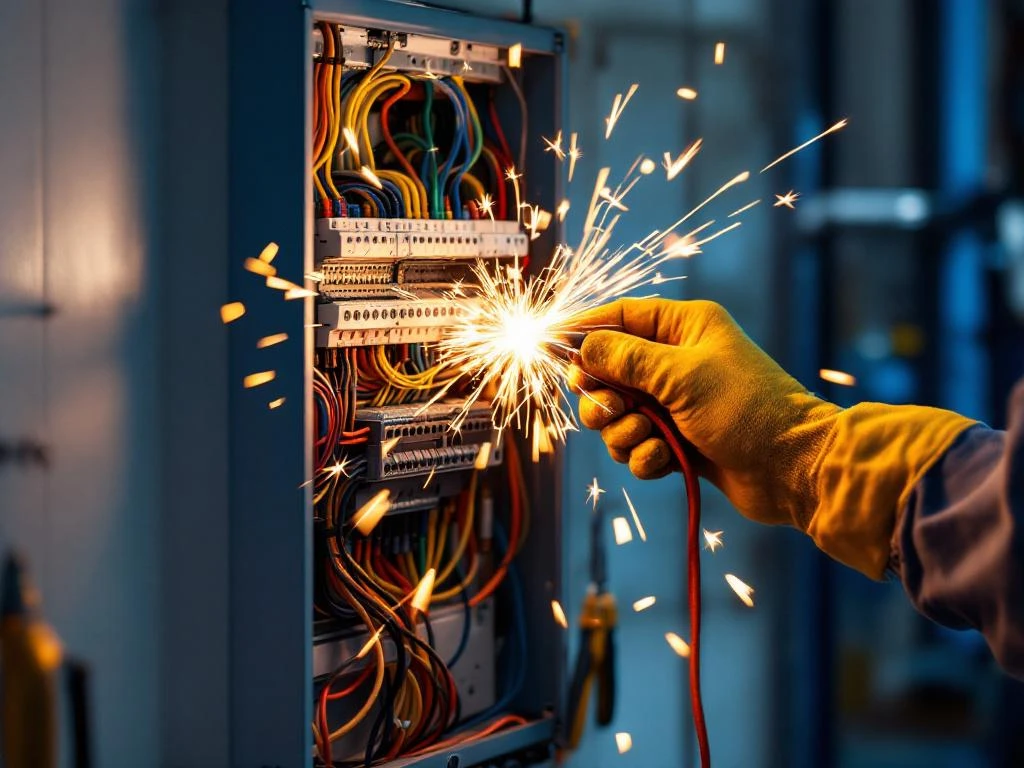
Emergency electrical safety issues such as sparks, burning odors or total power failure should be dealt with immediately. 24 center offers on-call service around the clock on 08 40 24 240. In case of emergency, first turn off the main switch for safety, then contact our emergency hotline for immediate assistance from a qualified electrician.
How often do I need to have an electrician check my electrical installation?
In private homes, an electrical safety check is recommended every 10-15 years, or when buying an older property. If you have an electrical installation older than 30 years, it should be checked more often. Signs that you need an electrician include: frequently tripped fuses, hot odors from electrical cabinets, flickering lights or sockets that are not working properly.
What documents should I receive after a qualified electrician has carried out work?
Once the electrical work has been completed, you should receive an installation report or electrical certificate showing that the work was carried out in accordance with the applicable regulations. You should also receive a receipt with the electrician's company details, F-tax certificate and guarantee conditions. These documents are important for insurance purposes and may be needed in the event of a future sale of the property.
Can I prepare something before the electrician arrives to save time and money?
Yes, you can prepare by clearing furniture away from the work area, ensuring free access to the switchboard and turning off the power to affected circuits if the electrician asks for it. Also, have a list of all the problems you've spotted ready so that the electrician can fix everything at once, saving both time and money.