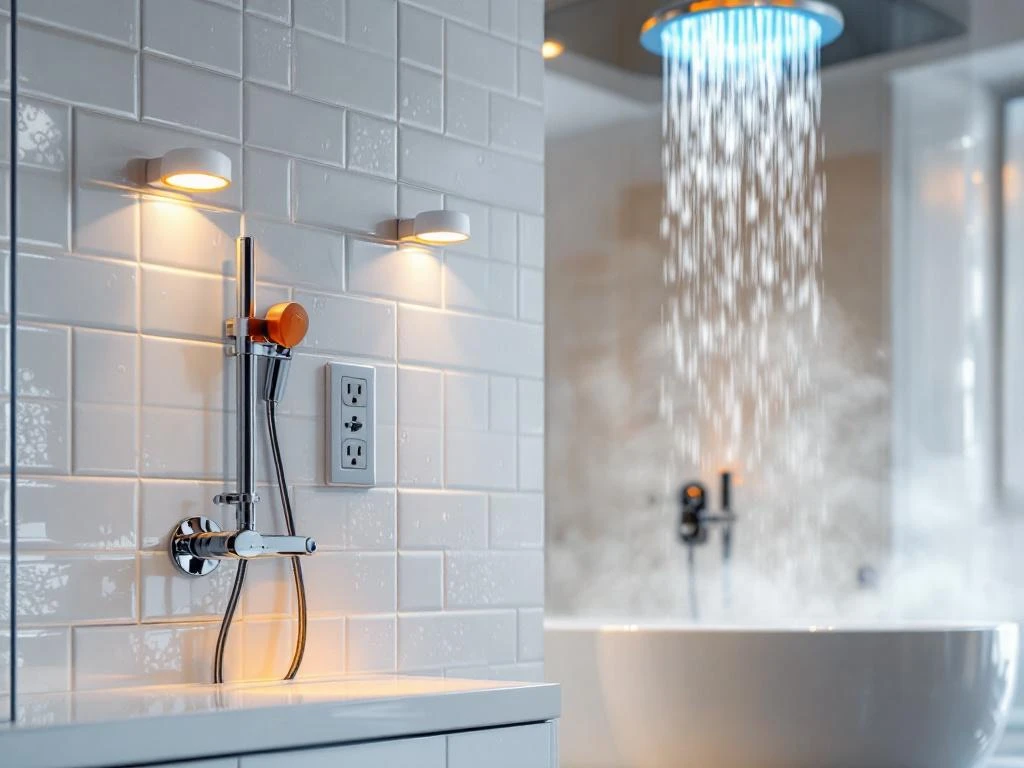
Electrical safety in the bathroom is regulated through strict safety zones, IP rating requirements and earth leakage switches. The bathroom is divided into four safety zones (0-3) with different requirements for electrical equipment depending on water exposure. Electrical outlets may only be placed in zone 3 with at least IP44 rating and RCD protection. These rules protect against electrical accidents in wet areas by minimizing the risk of contact between electricity and water.
What are the safety zones in the bathroom and what do they mean?
The bathroom is divided into four safety zones (0-3) according to Swedish standards, where each zone has specific requirements for electrical installations based on water exposure. Zone 0 is the bath or shower tray itself where only 12V equipment is allowed. Zone 1 extends 2.25 meters up from the bath bottom where only protection class II equipment may be installed.
Zone 2 covers the area 0.6 meters around the bath/shower and up to 2.25 meters in height. It requires a minimum IP44 rating for all electrical equipment. Zone 3 is the remaining bathroom area where normal electrical installations are allowed with earth leakage protection.
Zoning ensures that electrical installations are placed at a safe distance from water. The closer to the water source, the more stringent the safety requirements to prevent electrical accidents.
What IP rating is required for electrical equipment in the bathroom?
IP rating indicates the level of protection against water and dust for electrical equipment. In bathrooms, at least IP44 rating is required for electrical equipment in zone 2, which means protection against splashing water from all directions. In zone 1, IP65 or higher is required to withstand direct water jets.
Practical examples include bathroom lighting that needs IP44 near the shower, bathroom fans that require IP45 for moisture protection, and electrical outlets that must have IP44 with tight covers. Luminaires in the shower zone need IP65 to withstand direct contact with water.
The IP rating consists of two digits, with the first digit indicating dust protection and the second digit water protection. For wet areas, water protection is most critical, with IP44 providing basic splash protection and IP65 providing complete protection against water jets.
Where are electrical outlets allowed to be placed in the bathroom under the regulations?
Electrical outlets may only be located in zone 3 with a minimum distance of 0.6 meters from the bath, shower and sink. All electrical outlets must have earth leakage protection and IP44 rating with tight covers for moisture protection. Outlets near sinks require extra care and should be placed at least 0.6 meters from the water tap.
The safety distance is measured from the edge of the water carrier, not from the tap or mixer itself. This means that electrical outlets must not be placed directly next to the sink or within reach of the shower or bath.
RCDs are mandatory for all bathroom sockets and must have a maximum tripping current of 30 mA. This ensures rapid disconnection in the event of grounding through the body, which can save lives in case of electrical accidents in wet environments.
Why are RCDs required in wet areas?
RCDs are mandatory in bathrooms because they protect against electrical accidents by disconnecting the power within milliseconds when they detect leakage current through the body. In wet environments, the risk of being electrocuted increases dramatically because water makes the body more conductive.
The RCD continuously measures the current difference between the phase and neutral conductors. Under normal conditions, this difference is zero, but if current leaks through the body to earth, the switch detects this and disconnects within 0.04 seconds.
In wet areas, RCDs with 30 mA trip current are required, which is below the level that can cause cardiac arrest. This rapid response is vital because water greatly reduces the body's electrical resistance and increases the risk of serious injury in electrical accidents.
How 24 Center helps with electrical safety in the bathroom
We offer professional services to ensure your bathroom meets all electrical safety regulations. Our qualified electricians have expert knowledge in safety zones, IP rating and RCD installations for wet areas.
Our bathroom safety services include:
- Checking existing electrical installations against current safety standards
- Installation of residual current devices and safe electrical outlets in zone 3
- Upgrading bathroom lighting to the right IP rating
- Installation of bathroom fans with proper moisture protection
- 24-hour emergency assistance for electrical faults in wet areas
We work according to Swedish electrical safety standards and ensure that all installations follow zoning and IP rating requirements. Call 08 40 24 240 for immediate assistance with electrical safety in your bathroom or contact 24 Center for planned safety upgrades.
Frequently asked questions
Can I replace electrical sockets in the bathroom myself or do I need an electrician to do it?
All electrical installations in bathrooms must be carried out by a qualified electrician according to Swedish law. This includes replacing electrical outlets, installing lighting and fitting earth leakage switches. An authorized electrician ensures that the installation complies with the safety zones and IP rating requirements, and performs mandatory inspection after the work.
What if my existing bathroom does not meet current safety requirements?
Older bathroom installations do not necessarily need to be upgraded immediately, but in case of renovation or if electrical faults occur, the installation must comply with current safety standards. We recommend a safety check by an electrician to identify potential risks and plan any upgrades to ensure your family's safety.
How do I know if my RCD is working properly?
Test the RCD monthly by pressing the test button - it should then disconnect the power immediately. If the circuit breaker does not trip when tested or if it trips spontaneously for no reason, contact an electrician immediately. RCDs have a lifespan of approximately 10-15 years and should be replaced by a qualified electrician when they become old.
Can I use an extension cord in the bathroom?
Extension cords should be avoided in bathrooms because of the safety risks. If absolutely necessary on a temporary basis, only use extension cords with earth leakage protection and IP44 rating, and make sure it is not placed in zone 0, 1 or 2. Permanent solution is always to have an electrician install fixed electrical outlets in safe locations in zone 3.
What are the common mistakes made during bathroom renovation that affect electrical safety?
Common mistakes include placing electrical outlets too close to the sink or shower, using lighting without the correct IP rating, and not installing earth leakage switches for new circuits. Many people also forget to measure the safety distances from the edge of the water carrier instead of from the tap. Always use a qualified electrician to avoid these costly and dangerous mistakes.
Can I install electric heating or a heated towel rail in the bathroom?
Yes, but there are specific requirements depending on location. Electric heating and towel rails in zones 1 and 2 must be permanently installed, have the correct IP rating and be connected via an RCD. Portable electric radiators must never be used in bathrooms. Have an electrician assess the appropriate location and installation to ensure that the equipment complies with safety zone requirements.