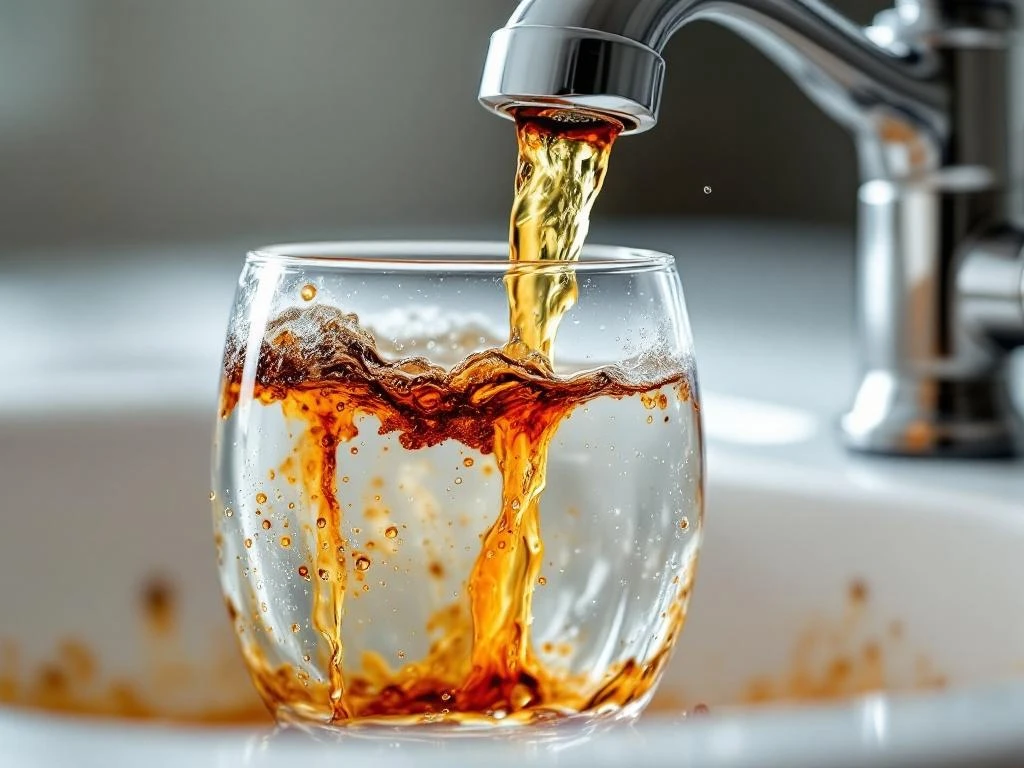
Rust-colored hot water is most often caused by corrosion in water pipes or sediment in the water heater. When ferrous pipes or tanks rust, iron oxide leaks into the water, giving it a brown or orange tint. The problem is more common in older properties with original water pipes, but can also occur temporarily after work on municipal pipes. We help you understand the causes and what you can do about discolored water.
Why is my hot water rust-colored or brown?
Brown water from the hot water tap occurs when iron oxide (rust) from water pipes or the water heater dissolves in the water. The most common causes are corrosion in old iron pipes, rust inside the water heater, or sediment buildup that moves up when the water pressure changes. If only the hot water is discolored while the cold water is clear, it points to problems in your water heater or in pipes after the heater.
Older properties with iron pipes are particularly vulnerable as these pipes naturally corrode over time. As the protective layer inside the pipes breaks down, the water comes into direct contact with the metal, accelerating the formation of rust. Water quality also plays a role - water with a low pH (acidic water) or high acidity increases the rate of corrosion.
In the water heater, sediment and rust particles collect on the bottom. When you suddenly use very hot water or when the temperature changes, these particles can swirl up and color the water. This explains why the problem sometimes comes and goes, especially after periods when the hot water is not used.
If both hot and cold water are rust-colored, the problem may be in the municipal water pipes. This often happens after repairs or flushing of main pipes, but is usually temporary. Contact your municipality to check if they are carrying out works in the area.
Is rust-colored water dangerous to drink or use?
Iron oxide (rust) in water is generally not dangerous to health in small amounts, but it is unpleasant and may indicate other problems. Rust gives water a metallic taste and can stain crockery, clothes and dishwashers. Although iron is a mineral the body needs, rust-colored water is not suitable for drinking because it may contain other contaminants from corroded pipes.
The most important thing is to understand the difference between harmless iron oxide and potentially more dangerous contaminants. If corrosion is widespread, other metal particles and bacteria can follow in the water. Old leaded solder in pipes poses a particular risk, although this is unusual in modern Swedish properties.
You should avoid using rust-colored water for cooking and drinking. For showering and washing, it is usually harmless but impractical because it stains. If the water has a strong metallic smell, tastes strange, or if the discoloration is severe and persistent, you should contact a building technician for examination.
Special care should be taken if you have immunocompromised persons or infants in the household. In these cases, we recommend using bottled water until the problem is resolved and the water quality confirmed.
What can I do myself when the hot water is rust-colored?
Start by flushing the pipes by letting the hot water run for 10-15 minutes. Open the tap closest to the water heater and let the water run until it becomes clear. This will help if the problem is due to stirred-up sediment or temporary contamination. At the same time, check if the cold water is also discolored to determine if the problem is local or coming from the municipal pipes.
Inspect visible water pipes for signs of corrosion. Look for rust spots, moisture or green-colored deposits around fittings and joints. If you see obvious corrosion, you'll need professional help, but the information will help the technician identify the problem more quickly.
Draining the water heater of sediment can solve the problem if it is due to a build-up of particles. Many modern water heaters have a drain tap at the bottom for this purpose. Turn off the power and the cold water supply, connect a hose to the tap and drain a few liters of water into a bucket. If the water is very cloudy or rust-colored, it indicates sediment problems.
These measures are often sufficient if the problem is temporary or mild. If the water remains discolored after thorough flushing, or if the problem returns within a few days, you will need professional help to identify and fix the root cause.
When do I need to contact a building technician for rust-colored water?
If the discoloration continues after 15-20 minutes of flushing or if the problem recurs regularly, contact a building technician. This indicates that the corrosion is extensive or that the water heater needs service or replacement. Other warning signs include concurrent problems with water pressure, uneven water temperature, or noticeable leaks.
Visible corrosion on pipes or water heaters requires immediate professional assessment. Corrosion deteriorates quickly and can lead to water leaks that cause water damage to the property. A plumbing technician can inspect the system, identify the extent of the damage and recommend appropriate action.
We perform thorough inspection of water pipes and water heaters to find the source of the problem. Depending on the diagnosis, the solution can be anything from sediment cleaning and water chemistry adjustment to replacing parts in the heater or replacing corroded water pipes. In older properties, we often recommend upgrading to modern pipes such as copper or plastic for long-term solution.
For emergencies involving badly discolored water or suspected leaks, we offer 24/7 emergency services. Prompt action prevents worse damage and ensures you get access to clean, safe water again quickly. Call us and we'll help you assess the situation and book a visit to suit your needs.
Rust-colored hot water is a sign that your water system needs attention. Although the problem sometimes resolves itself with simple flushing, recurrent discoloration indicates that action is needed to protect both water quality and the property's plumbing system. Don't hesitate to contact us for professional advice and assistance.