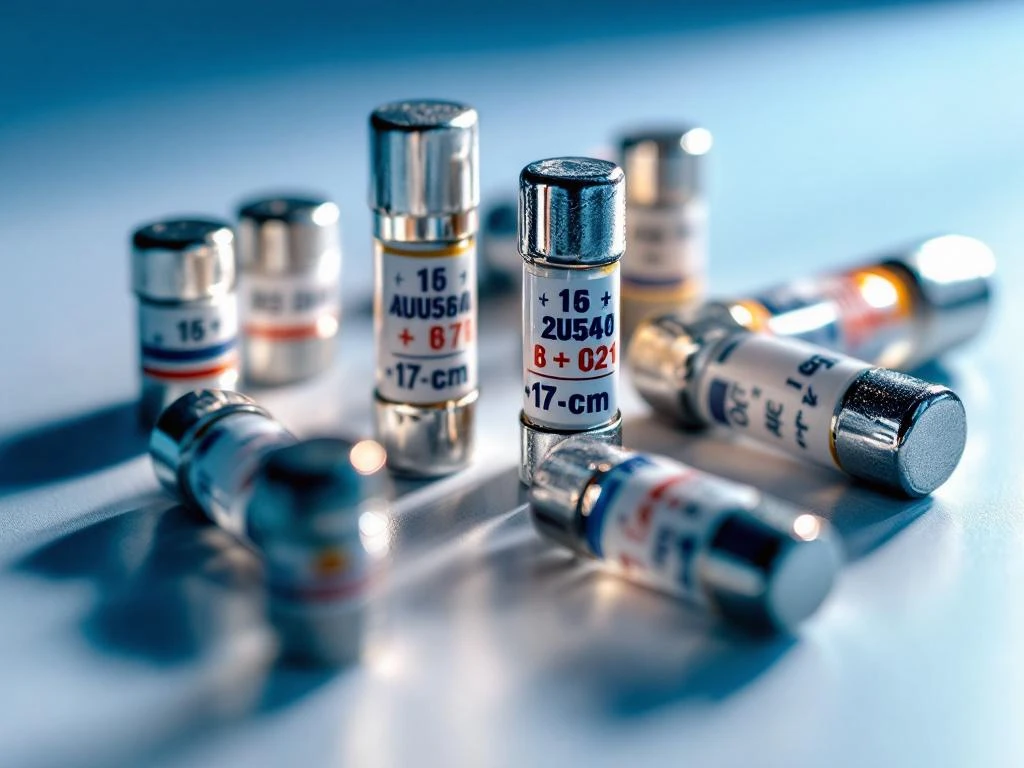
Fuse markings indicate the amperage and type of fuse you have in your electrical panel. The markings include ampere values (such as 10 A or 16 A), letter codes (B, C, D), and symbols that indicate how the fuse works. This information helps you understand which fuse is suitable for different electrical circuits in your home and why the correct markings are important for electrical safety.
What do the numbers on the fuses mean?
The numbers on fuses indicate the ampere rating, which shows the maximum current the fuse can handle before it trips. For example, a fuse marked "16 A" can handle up to 16 amps before it protects the circuit by breaking the current.
Swedish homes usually have the following ampere ratings:
- 6 A fuses – used for lighting circuits and small electrical appliances
- 10 A fuses – common for lighting and smaller outlets
- 16 A fuses – standard for regular electrical outlets in kitchens, living rooms, and bedrooms
- 20 A fuses – used for more powerful appliances such as dishwashers or washing machines
The ampere rating is important because it ensures that the fuse blows before the wires become overloaded. If you use a fuse with too high an ampere rating, the wires may overheat without the fuse reacting, creating a fire hazard.
What symbols and letters are found on fuses?
Fuses contain several symbols and letter codes that indicate the fuse's characteristics and area of application. The most common markings include trip curves, CE marking, and manufacturer codes that help you understand the fuse's function.
Letter codes for trigger curves:
- B curve – trips quickly at 3–5 times the rated current, used for lighting and standard household appliances
- C curve – trips at 5–10 times the rated current, most common in residential buildings for general electrical outlets
- D-curve – trips at 10–20 times the rated current, used for motors and devices with high starting currents
Other important symbols include the CE marking, which indicates that the fuse complies with European safety standards, the manufacturer's logo, and sometimes voltage specifications such as 230 V or 400 V. These symbols help you choose the right fuse for specific electrical installations.
How do you read the markings on different types of fuses?
Different types of fuses have specific markings that are read in different ways depending on their function. Automatic fuses, earth fault circuit breakers, and earth fault circuit breakers with overcurrent protection (differential circuit breakers) all have their own marking systems that you need to understand in order to operate your electrical panel safely.
Automatic fuses are marked with:
- Ampere rating (6 A, 10 A, 16 A, 20 A)
- Trigger curve (B, C, or D)
- Voltage specification (230 V/400 V)
- Breaking capacity (often 6,000 A or 10,000 A)
Earth fault circuit breaker indicates:
- Märkström (same as automatic fuse)
- Tripping current for earth faults (usually 30 mA)
- Test button marked "T" for function check
Earth fault circuit breakers with overcurrent protection combine both functions and are marked for both overcurrent protection and earth fault protection. These fuses are common in modern electrical distribution boards because they provide complete protection in a single unit.
Why is it important to understand fuse labeling?
Proper understanding of fuse labeling prevents fires and electrical accidents by ensuring that the correct fuse is used for each electrical circuit. The wrong fuse can either trip too often or, worse, fail to protect the wiring from overload.
Safety risks associated with incorrect fusing:
- Too high an amperage value can lead to overheating of wires and a fire hazard.
- Too low an ampere value causes unnecessary power outages.
- Incorrect trigger curve can damage sensitive electronic devices
- Inadequate ground fault protection increases the risk of electric shock
You should contact an electrician when fuses blow repeatedly, when you plan to install new high-power appliances, or when you are unsure which fuse is suitable for your electrical installation. Professional help ensures that your electrical installation complies with applicable safety standards.
How 24 Center helps with electrical safety and fuse problems
We offer professional electrical services around the clock for all types of fuse problems and electrical installations. Our qualified electricians handle everything from emergency fuse replacements to complete upgrades of electrical panels with modern safety technology.
Our electrical services include:
- Emergency fuse replacement and troubleshooting in electrical distribution boards
- Installation of new automatic circuit breakers and ground fault circuit interrupters
- Upgrading old fuse boxes to modern automatic fuses
- Installation of earth fault circuit breakers with overcurrent protection for improved protection
- Inspection and labeling of electrical distribution boards in accordance with applicable standards
- Installation of electrical locking and alarm systems
With our local focus and extensive network of specialists, we are available throughout Sweden. Our technicians have in-depth knowledge of both older and modern electrical installations, enabling us to offer accurate service and quick solutions for all types of fuse problems.
Kontakta oss på 020 74 24 70 för omedelbar hjälp med säkringsproblem, eller boka online för planerade elinstallationer. Vi erbjuder service dygnet runt med kort responstid eftersom vi vet att elektriska problem sällan uppstår vid lämpliga tidpunkter.
Frequently asked questions
Can I replace a fuse that has blown myself?
You can replace an automatic fuse that has tripped, but first check the cause of the trip. If the fuse trips again immediately after resetting, there is an underlying problem that requires the help of an electrician. Avoid replacing the fuse with one with a higher ampere rating – this can create a fire hazard.
How do I know which fuse is suitable when installing new appliances?
Calculate the power requirement (watts) of the appliance and divide by the voltage (230V) to obtain the current requirement in amps. Then select a fuse with the appropriate amp rating and C-curve for standard household appliances. For appliances over 3000W or with high starting currents, such as heat pumps, you should consult an electrician.
What should I do if the fuse keeps blowing for no apparent reason?
Repeated tripping without any apparent cause may be due to overload, short circuit, or ground fault in the circuit. Disconnect all appliances from the circuit and reset the fuse. Then reconnect the appliances one at a time to identify the problem. If the fuse still trips, contact an electrician immediately.
Is it dangerous to have old porcelain fuses instead of modern automatic fuses?
Old porcelain fuses work but lack many of the safety features offered by modern circuit breakers. They have no ground fault protection and cannot be reset after tripping. We recommend upgrading to modern circuit breakers with ground fault protection for better safety and convenience.
How often should I test the earth leakage circuit breaker?
Test the earth leakage circuit breaker monthly by pressing the test button (T). If the earth leakage circuit breaker does not trip during testing or if it trips spontaneously without cause, contact an electrician immediately. A defective earth leakage circuit breaker provides no protection against electric shock and poses a serious safety risk.
How much does it cost to upgrade from old fuses to modern automatic fuses?
The cost varies depending on the size and complexity of the electrical panel, but expect to pay between $800 and $2,500 for a complete upgrade of a typical single-family home. The price includes new circuit breakers, ground fault circuit interrupters, installation, and labeling. Contact us for a free quote based on your specific situation.
Can I use fuses from different manufacturers in the same electrical panel?
Yes, you can combine fuses from different manufacturers as long as they meet the same technical specifications and safety standards (CE marking). The most important thing is that the amperage, trip curve, and voltage rating match the circuit's requirements. Always choose fuses from well-known manufacturers for the best quality and safety.