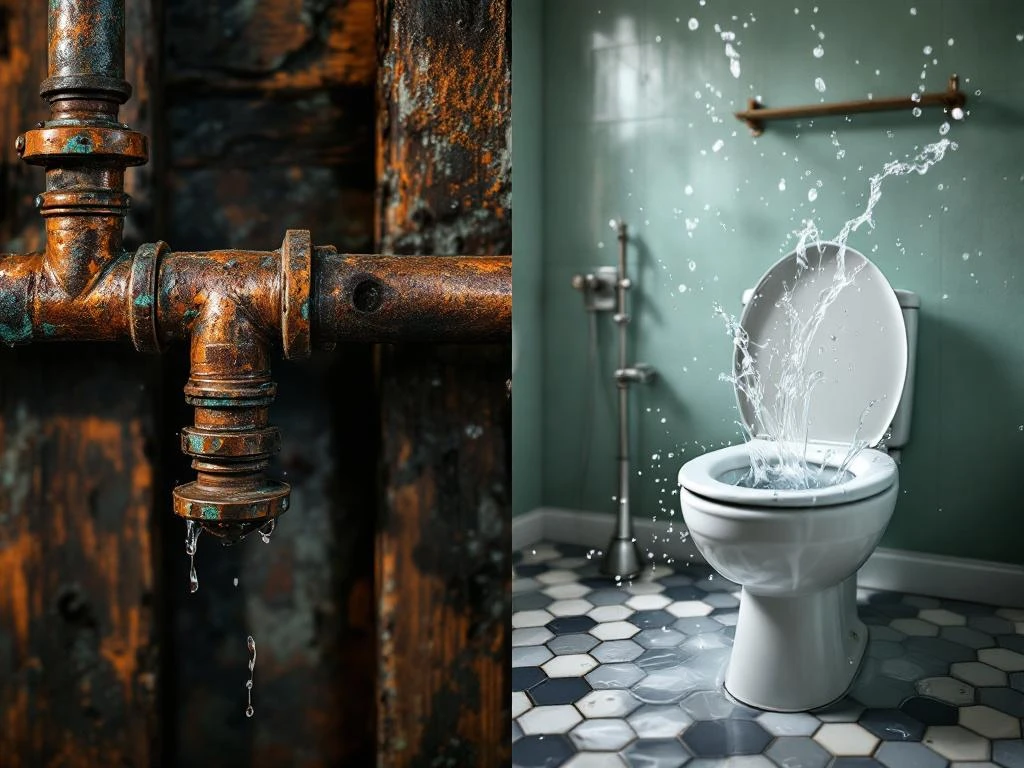
Older houses are most often affected by water leaks, burst pipes and sewage problems as the most common plumbing faults. These problems are caused by ageing pipes, worn gaskets and outdated installation techniques that cannot cope with today's loads. Running toilets and poor flushing are also very common in older buildings, especially in houses built before the 1980s.
What are the most urgent plumbing problems that occur in older houses?
Water leaks and burst pipes are the most urgent plumbing problems in older properties as they can cause extensive water damage within a short time. Sewer blockages leading to flooding and completely broken toilets that cannot be used also require immediate attention.
The most critical problems include cracked water pipes in walls, which can cause moisture damage and mold growth. Old cast-iron pipes from the 1950s-60s are particularly prone to corrosion and sudden breaks. Sewer lines that are completely blocked can cause wastewater to flow back into the home.
Acute plumbing problems require professional help as DIY fixes often make the situation worse. Turn off the main water valve in case of major leaks and contact a plumber immediately to minimize the damage.
Why do older houses often have problems with poor flushing and running toilets?
Older toilet systems often have worn gaskets, limescale deposits and outdated flushing technology that make them malfunction. Rubber gaskets in the flushing mechanism become hard and leaky after 15-20 years, causing continuous running water and poor flushing performance.
Lime deposits build up over time in the flush channels and under the toilet rim, significantly reducing water flow. In addition, old toilets from the 1970s and 1980s have less efficient flushing systems compared to modern models. The flushing mechanism inside the cisterns also becomes unreliable as plastic parts age and crack.
Many older houses also have low water pressure due to old pipes, which exacerbates flushing problems. You can improve the situation by cleaning the flush holes regularly and replacing worn gaskets, but often a complete renovation of the toilet system is needed.
What causes water leaks in walls and floors of older buildings?
Corrosion of old copper and cast iron pipes causes most water leaks in the walls and floors of older buildings. Pipes installed before 1980 have often reached the end of their lifespan and develop small holes or cracks that gradually grow into larger leaks.
Structural movements in older houses negatively affect pipelines. When the building settles or wooden structures move seasonally, this can put pressure on pipe connections and cause leaks. Weakened joints around pipes passing through walls and floors are also common leakage points.
Old pipes often have poorer insulation, which causes condensation to form on the outside and can be mistaken for leaks. Real water leaks are often noticeable through damp patches on walls, fungal odors or unusually high water costs. Hidden leaks are particularly problematic as they can go on for a long time before being detected.
How can you prevent the most common plumbing faults in your older house?
Regular inspection of visible pipes, faucets and toilets will help you spot problems early before they become costly repairs. Check monthly for signs of leaks, corrosion or unusual noises from the plumbing system.
Key prevention measures include:
- Replace old gaskets in taps before they start leaking
- Clean the flush holes in toilets regularly from lime and dirt
- Insulate pipes in cold spaces to prevent freezing
- Avoid flushing grease and food residues that can cause sewage problems
- Let the water run gently on cold winter days to prevent freezing
Plan for major renovations by upgrading the plumbing system in stages. Start with the most critical parts such as old main pipes and toilets with recurring problems. Document the location of main water valves and shut-offs so you can act quickly in emergency situations.
How 24 Center helps with plumbing problems in older houses
At 24 Center, we understand the specific challenges of older properties and offer specialized plumbing services around the clock. Our plumbers have extensive experience with older building types and are familiar with the most common issues with plumbing problems in older properties.
Our services for older houses include:
- Emergency plumbing assistance for water leaks and burst pipes
- Professional repair of running toilets and poor flushing
- Upgrading old HVAC systems with modern solutions
- Preventive maintenance to minimize future problems
- Installation of new faucets, toilets and other plumbing components
Our technicians have local knowledge of older building stock and can quickly identify the root cause of problems. We offer both emergency repairs and planned renovations to improve the long-term performance and reliability of your HVAC system.
Call us on 08 40 24 240 for immediate assistance with emergency plumbing technicians Stockholm, or book online for planned maintenance works and plumbing maintenance older buildings.
Frequently asked questions
How do I know if my old pipes need to be completely replaced or if repair is enough?
If your pipes are from the 1970s or earlier and you have recurring leaks, corrosion spots or noticeable deterioration in water pressure, you should consider replacement. A professional inspection can determine the condition of the pipes, but as a rule of thumb, cast iron pipes over 50 years old and copper pipes over 40 years old often need to be replaced to avoid future problems.
What is the approximate cost of renovating the HVAC system in an older house?
The cost varies greatly depending on the size of the house and the scope of the renovation. A partial update of critical parts can cost €50,000-150,000, while a complete HVAC renovation in an older house often costs €200,000-400,000. We recommend getting a cost estimate to plan the renovation in stages.
Can I change gaskets and make minor plumbing repairs in my older house myself?
Simple jobs like replacing gaskets in faucets and cleaning flush holes can often be done yourself. However, you should avoid working on pipes in walls or complex drainage problems, as older houses often have unpredictable pipework and an incorrect repair can cause significantly more damage than the original problem.
How often should I inspect the HVAC system in my older house?
Do a thorough inspection every three months of all visible pipes, taps and toilets. Check monthly for moisture stains, unusual sounds or odors. In addition, have a professional plumber do a comprehensive walk-through every two years to detect hidden problems before they become acute.
What are the warning signs that I have hidden water leaks?
Unusually high water costs, damp patches on walls or ceilings, fungal odors, sounds of running water when no taps are turned on, and soft or spongy floors are clear signs. If you notice the water meter moving when no water is being used, you definitely have a leak somewhere in the system that requires immediate investigation.
Is it worth upgrading to modern HVAC solutions in a very old house?
Absolutely, modern HVAC systems are significantly more energy efficient, reliable and environmentally friendly than older installations. Upgrading increases the value of your home, reduces the risk of water damage and improves comfort. Although the investment is significant, you will save money in the long run through lower maintenance costs and fewer emergency repairs.
What should I do if I suspect that my sewer pipes are blocked or damaged?
Stop using the drain immediately and contact a professional plumber. Do not try to use strong chemicals or mechanical tools on your own, as old sewer pipes can be fragile. Document any warning signs such as bubbling sounds, bad odors, or slow draining to help the plumber's diagnosis.