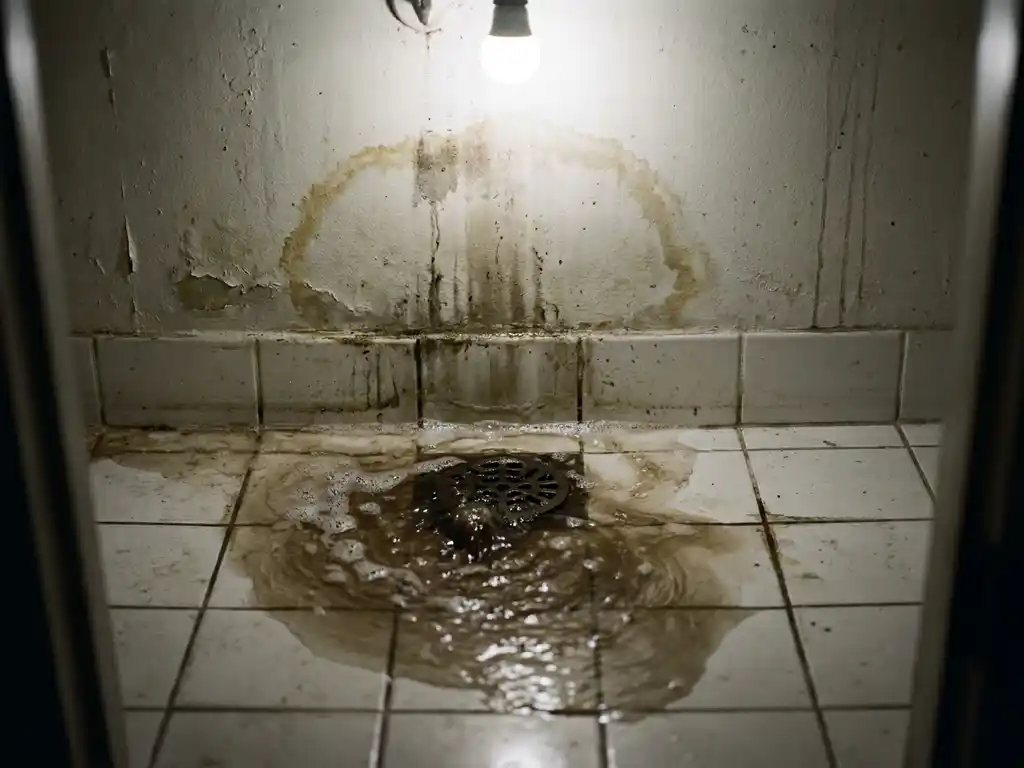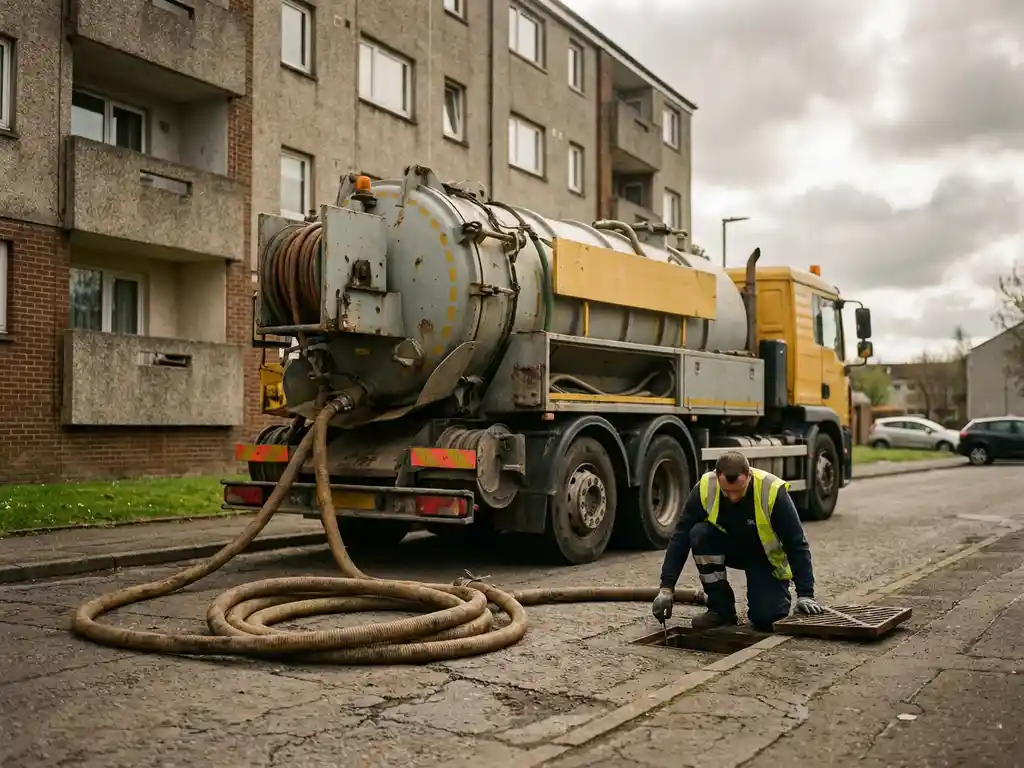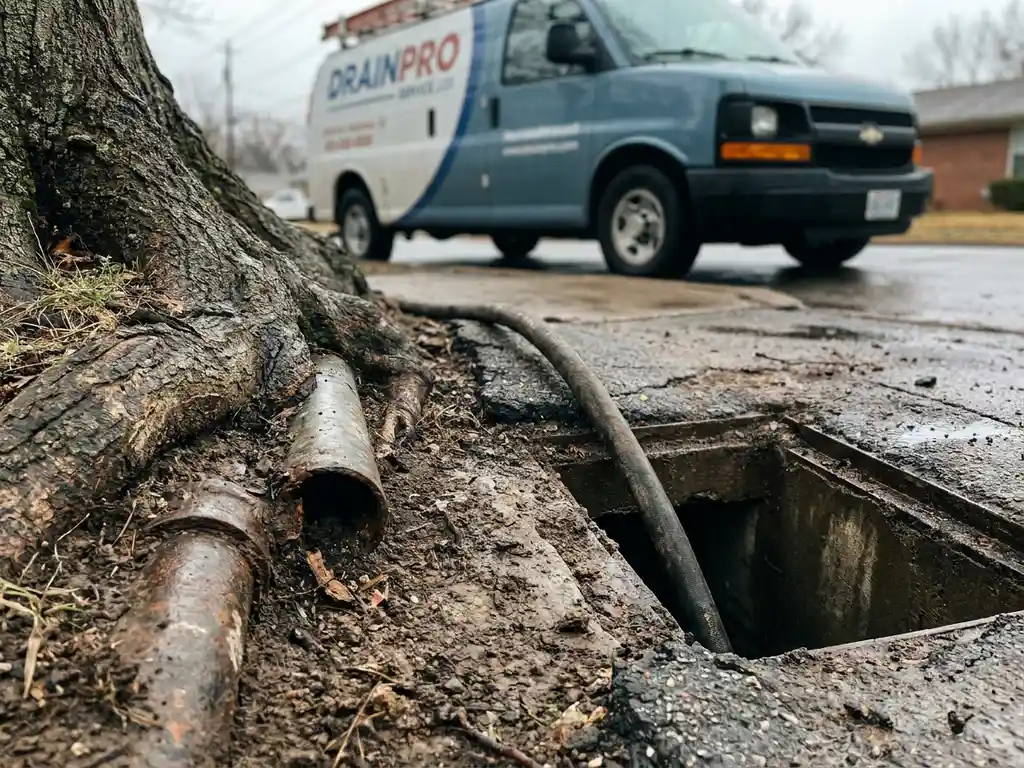

Flush trucks and suction trucks are two different methods of sewer cleaning that solve different types of problems. Flush trucks use high-pressure water to flush away blockages and clean pipes, while suction emptying sucks up sludge, water, and solid particles from wells and septic tanks. Flush trucks work best for blockages in pipes, while suction emptying is used to empty tanks and wells of their contents.
What is the difference between a flushing truck and suction emptying?
A flushing truck uses high-pressure water, often in combination with hot water, to clear blockages and clean pipes from the inside. The method uses powerful water pressure that is forced through the pipes to dissolve grease, limescale, and other accumulations that block the drain. Suction emptying works by using vacuum technology to suck up contents from closed spaces such as septic tanks, drainage wells, and storm water wells.
Technically speaking, the methods differ in terms of how they work. The flushing truck is equipped with high-pressure pumps that can deliver water at very high pressure through specially designed nozzles. These nozzles are designed to flush both forwards and backwards at the same time, which means they can break through blockages while cleaning the pipe walls.
Suction emptying instead uses powerful vacuum pumps mounted on special vehicles. These pumps create negative pressure that sucks up all contents through thick hoses. The equipment can handle both liquids and solid particles, making it ideal for emptying wells and tanks.
When should you use a flushing truck, and when is vacuum emptying better?
A flushing truck is the best method when you have blockages in pipes, especially in main pipes and storm water pipes. It works excellently for pipes with a diameter from 50 mm up to larger main pipes. The method is also ideal for regular maintenance flushing of sewage systems to prevent blockages.
Suction emptying is selected when you need to empty closed spaces such as septic tanks, drainage wells, or storm water wells. The method is also necessary when there is a lot of sludge, sand, or other solid particles that cannot be dissolved by flushing.
Accessibility also plays a role in the choice of method. Flushing trucks require access to the beginning of the pipeline or inspection wells, while suction emptying requires access to openings in tanks and wells. In confined spaces or where vehicles have limited access, this can affect which method is practically feasible.
For septic tanks, suction emptying is the only suitable method, as the contents must be physically removed. Stormwater pipes, on the other hand, are usually cleaned with a flushing truck, as the problem is usually accumulations of leaves, sand, and dirt that can be flushed away.
What types of sewage problems are solved by flushing trucks and suction emptying?
A flushing truck effectively removes grease blockages, limescale deposits, hairballs, and other organic accumulations in pipes. The method is particularly good at removing grease that has solidified in the pipes, as hot water dissolves the grease while high pressure flushes it away. A flushing truck can also deal with roots that have grown into pipes by cutting them off with powerful water pressure.
Suction cleaning handles sludge, sand, gravel, and other heavy particles that have accumulated in wells and tanks. The method is indispensable for removing large amounts of solid material that cannot be dissolved or flushed away. Suction cleaning is also used to handle chemicals or other hazardous substances that require safe disposal.
When it comes to roots in sewer systems, both methods may be appropriate. A flushing truck cuts off roots and flushes them away, while suction cleaning may be needed to remove larger masses of roots that have come loose. In many cases, the methods are combined for best results.
For storm water pipes containing sand and gravel, a flushing truck works well if the material can be dissolved and flushed away. However, if the accumulations are very large or dense, suction emptying may be necessary to first remove the coarsest material before flushing can be carried out effectively.
How much does a flushing truck cost compared to suction emptying?
The costs for flushing trucks and suction emptying vary depending on the scope and complexity of the problem. Flushing trucks are generally more cost-effective for simpler cleaning jobs, as the method works quickly and requires less follow-up work. Suction emptying can be more expensive per hour, but is often necessary for problems that cannot be solved in any other way.
Factors affecting the price include accessibility to the problem area, how far the flushing truck or vacuum truck needs to travel, and whether special equipment is required. Emergency call-outs cost more than scheduled jobs, especially in the evenings and at weekends.
The scope of the work plays a major role in the total cost. A simple flushing of a pipe may take 30–60 minutes, while emptying a large septic tank can take several hours. In addition, there are costs for removing the material that is sucked up during suction emptying.
To get the best value for money, it is important to choose the right method from the outset. Trying to solve a problem that requires suction emptying with flushing alone can lead to repeated costs without permanently solving the problem.
How 24 Center helps with sewer cleaning and emergency plumbing problems
We offer professional drain cleaning with both flushing trucks and suction emptying around the clock, every day of the year. Our on-call flushing truck drivers can respond immediately and arrive at your location within 15 minutes in the best case scenario when you have urgent drain problems.
Our wastewater treatment services include:
- Truck service with hot water and high pressure for blockages in pipes
- Vacuum emptying of septic tanks, wells, and storm water systems
- Pipe inspection with camera to identify the cause of the problem
- Flushing of the entire sewage system in buildings
- Emergency call-outs for flooding and blocked drains
With our extensive network of qualified technicians throughout Sweden, you always get fast, reliable service. Our local technicians are familiar with the specific conditions in the area and can quickly assess whether your problem requires a flushing truck, suction emptying, or a combination of both methods.
Ring 020 74 24 70 vid akuta avloppsproblem eller boka ett besök online för planerade rensningsarbeten. Vi gör det enkelt för dig att få professionell hjälp när du behöver den som mest.
Frequently asked questions
How do I know if I need a flushing truck or suction emptying for my sewage problem?
Start by identifying where the problem is. If water is flowing slowly or not at all in your drain pipes, you will probably need a flushing truck. If your septic tank, well, or storm drain is full of sludge or particles, suction emptying is required. If you are unsure, a technician can make an assessment on site.
Can you combine flushing and suction emptying in the same cleaning operation?
Yes, it is common to combine methods for best results. For example, vacuum cleaning can first be used to remove large amounts of sludge from a well, followed by a flushing truck to clear the pipes. This provides a more complete solution than using only one method.
How often should preventive flushing and suction emptying be performed?
Septic tanks should be emptied every 2-4 years depending on usage. Preventive flushing of main pipes is recommended annually or every other year. Stormwater drains may need to be emptied more often, especially in areas with a lot of leaves or sand.
What happens if the wrong method is used for my drainage problem?
Using the wrong method can be ineffective and waste money. Flushing trucks cannot empty full septic tanks, and suction emptying does not solve blockages in pipes. In the worst case, the wrong method can even exacerbate the problem or damage pipes.
Do I need to prepare anything before the flushing truck or vacuum truck arrives?
Ensure that technicians can access inspection wells, septic tanks, or the pipes that need to be cleaned. Clear away any objects that may be in the way and inform them of any special conditions, such as older pipes or sensitive plantings in the area.
Can flushing and suction cleaning damage my pipes?
When the methods are performed by professional technicians, the risk of damage is minimal. Modern equipment has adjustable pressure for flushing trucks and controlled suction power for suction emptying. Experienced technicians always adapt the method to the age and material of the pipes.
What should I do if the problem returns shortly after cleaning?
Recurring problems may indicate an underlying cause such as pipe damage, incorrect installation, or structural problems. Contact the same company for follow-up—reputable companies often offer a warranty on their work and may need to conduct a more in-depth investigation.