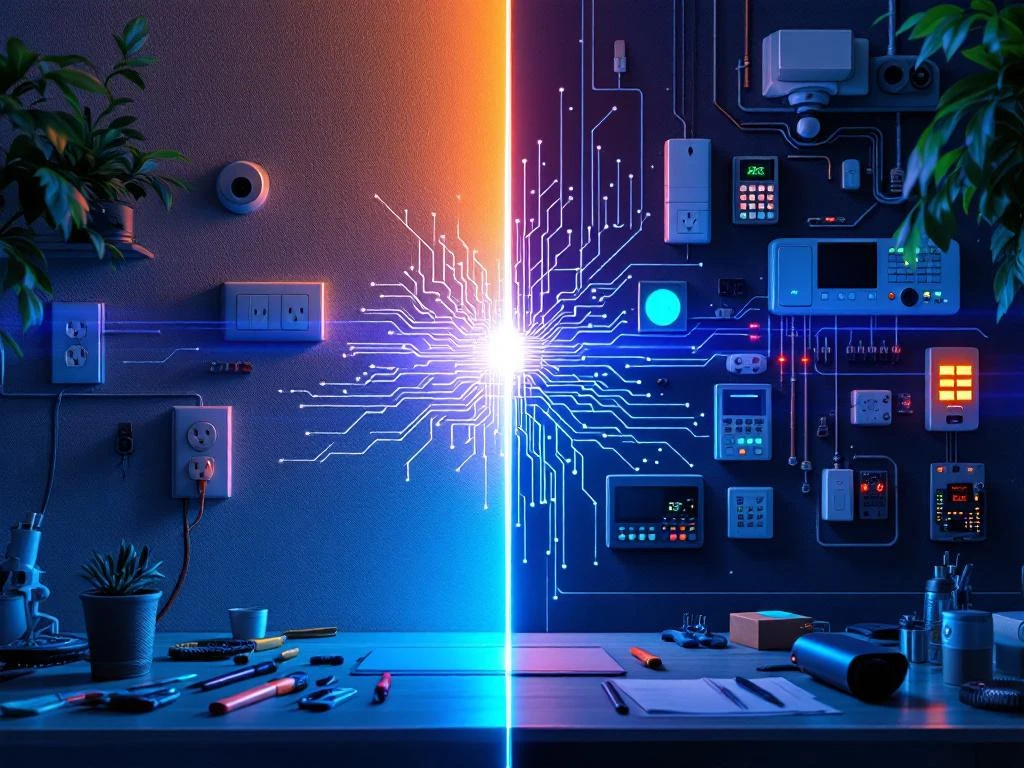
The difference between basic electrical installations and security technology solutions lies in complexity and specialization. Basic electrical installations include lighting, sockets, and fuses, while security technology solutions include electric locks, alarm systems, and access control, which require advanced knowledge of both electronics and security technology. These systems are often integrated with existing electrical installations but require specialized expertise for safe installation.
What is included in basic electrical installations and how do they differ from safety technology solutions?
Basic electrical installations include standard components such as lighting, wall sockets, fuses, and standard power circuits. Security technology solutions are specialized systems such as electric locks, alarm systems, and surveillance cameras, which require more in-depth knowledge of electronics and security technology.
Traditional electrical installations focus on supplying the property with power for everyday needs. This includes installing lights, outlets, electrical panels, and basic circuits. The work follows standardized methods and requires basic electrical knowledge.
Safety-related electrical installations differ in that they integrate electronics with safety functions. These systems must be able to communicate with each other, handle digital signals, and often connect to external monitoring centers or mobile apps. Installation requires an understanding of both electrical work and safety technology.
Which safety components require specialized electrical knowledge?
Electric locks, alarm systems, access control, surveillance cameras, and integrated security solutions require specialized electrical knowledge beyond basic electrical work. These systems often handle both low and high voltage and must be integrated with existing electrical installations without disrupting other functions.
Electric locks combine mechanical components with electronic controls. Installation requires knowledge of both lock mechanics and electrical connections to ensure reliable operation even during power outages.
Alarm systems include sensors, central units, and communication equipment that must work together. Each component requires specific voltage and signal handling that differs from standard electrical installations.
Access control systems integrate card readers, electric locks, and central control systems. Installation requires an understanding of data communication, encryption, and integration with existing IT systems.
When do you need an electrician versus a security technician?
You need an electrician for lighting, sockets, and work in electrical panels. A security technician is required for the installation of electric locks, alarm systems, and access control. Complex security systems often require combined expertise in both electrical work and security technology.
Common electrical work such as replacing fuses, installing lights or new sockets is handled by qualified electricians. This work follows standardised methods and requires basic electrical knowledge.
Security installations require specialists who are proficient in both electronics and security principles. This is particularly true when the systems are to be integrated with existing electrical installations or connected to external monitoring centers.
Many modern security solutions require combined expertise. An expert who is proficient in both basic electrical work and advanced security technology can ensure that all components work together without conflicts.
What safety aspects must be taken into account in electrical installations for security systems?
Critical safety aspects include redundant power supply, backup systems, fire protection, and protection against electromagnetic interference. The installation must comply with applicable safety standards to ensure that the systems continue to function even in the event of a power failure or other emergency.
Power supply for security systems requires backup solutions such as batteries or emergency power. These systems must continue to function even when the main power supply is interrupted, which requires careful planning of energy consumption and reserve capacity.
Fire protection is particularly important because security systems are often installed in sensitive areas. Cabling should use fire-resistant materials and be positioned so that it does not create fire hazards or obstruct evacuation.
Electromagnetic compatibility ensures that safety systems are not disrupted by other electronic devices. The installation may require shielded cables and proper grounding to avoid false alarms or system failures.
How 24 Center assists with safety-related electrical installations
We combine expertise in traditional electrical work and advanced security technology solutions to offer complete installations around the clock. Our technicians handle everything from basic electrical installations to advanced security systems with the same high quality and reliability.
Our services in safety-related electrical installations include:
- Installation of electric locks and smart locking systems
- Alarm system with integration to monitoring centers
- Access control systems for businesses and homes
- Surveillance cameras with digital image transmission
- Backup systems and redundant power supply
Our local presence throughout Sweden means that our technicians are familiar with the local building stock and its specific electrical challenges. This enables us to offer accurate solutions that work in the long term in your particular environment.
Ring 020 74 24 70 för omedelbar hjälp med säkerhetstekniska elinstallationer eller boka online för planerade projekt. Vi erbjuder både akuta reparationer och omfattande säkerhetsuppgraderingar med samma professionella arbetssätt.
Frequently asked questions
How much does it cost to upgrade from basic electrical installations to safety-related solutions?
The cost varies depending on the complexity of the system and the size of the property. A basic upgrade with electric locks and a simple alarm system can cost $1,500-$3,000, while advanced access control systems with integration can cost $5,000-$10,000 or more. We offer free consultations to provide you with an accurate quote based on your specific needs.
Can existing electrical installations be used for security systems, or does everything need to be replaced?
In most cases, existing electrical installations can be supplemented for security systems without having to be completely replaced. Security systems often require separate circuits to avoid interference, but the basic infrastructure such as electrical panels and main cables can usually be retained. Our technicians always assess existing installations before installation.
What permits or certifications are required for the installation of electrical safety systems?
Installing security electrical systems requires a qualified electrician with an F-tax card for electrical work, while security components may require special certification from the supplier. Some alarm systems must be reported to the police or insurance companies. We handle all necessary permits and certifications as part of our installation services.
How do you maintain safety-critical electrical systems to ensure long-term functionality?
Regular maintenance includes testing backup batteries every 6 months, checking all sensors and locks quarterly, and an annual review of the entire system by a qualified technician. We offer service agreements that include preventive maintenance, remote monitoring, and priority support in the event of a fault. This ensures optimal performance and extends the life of the system.
What happens if the security system stops working during a power outage?
Professionally installed security systems always have backup power supplies via batteries or backup power that keep the system running for 8-24 hours, depending on the system's energy consumption. Critical components such as locks and alarms are prioritized to ensure continued security. We size backup systems based on your specific security needs and frequency of use.
Can security systems be integrated with smart home solutions and mobile apps?
Yes, modern security systems can be integrated with smart home platforms and controlled via mobile apps for remote monitoring and control. This includes features such as remote locking, alarm management, and camera surveillance. We install systems that are compatible with popular platforms and offer training so that you can use all features effectively.
What common errors occur during the installation of electrical safety systems, and how can they be avoided?
Common faults include incorrect power supply, electromagnetic interference from other devices, and poor integration between components. These can be avoided through careful planning, the use of shielded cables, correct grounding, and testing of all system components before commissioning. Our certified technicians follow strict installation protocols to eliminate these risks.