
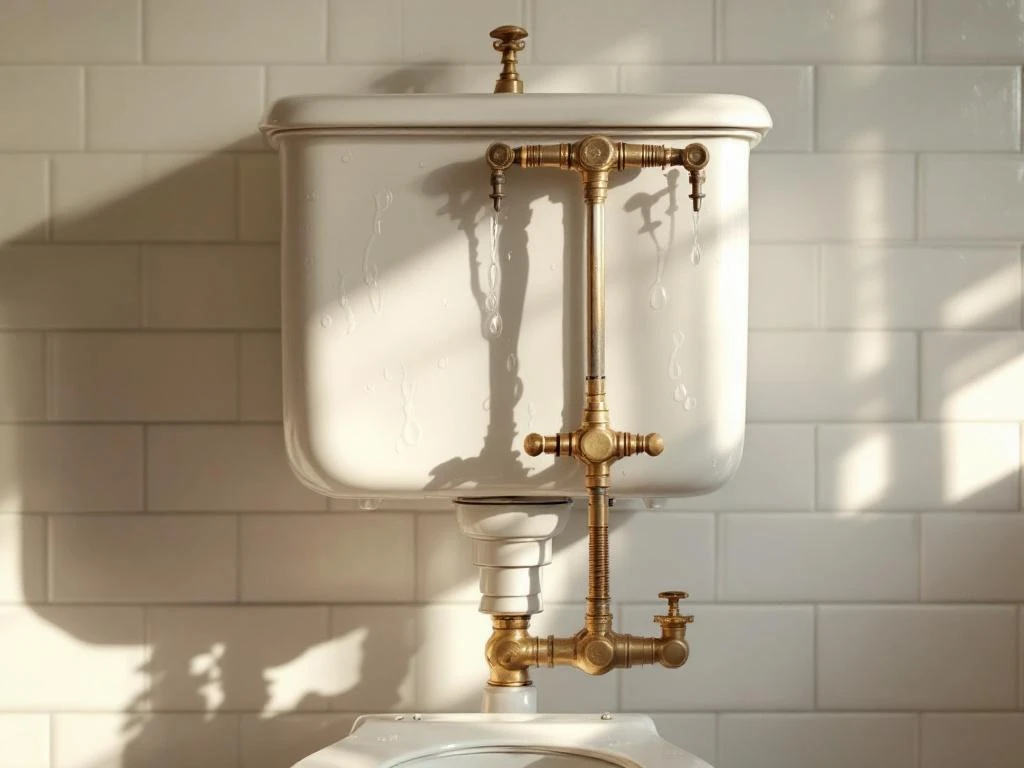
Yes, you can often repair an old high-hanging cistern by replacing specific components such as the flush mechanism, chain, float, or seals. Many cistern parts can be refurbished or replaced, which is both cost-effective and environmentally friendly. Repair options depend on the condition of the cistern, the availability of spare parts, and the extent of the damage. This guide will help you assess when cistern repair is possible and when it is time for replacement.
What is a high-hanging cistern and why does it break?
A wall-hung cistern is a water container mounted high up on the wall, usually 1.5–2 meters above the toilet seat. It consists of main components such as a flush mechanism, float, chain, seals, and valves that work together to regulate water flow and flushing.
The most common problems arise due to wear and tear over time. The flush mechanism can become stuck or break after years of use. The chain connecting the lever arm to the valve can rust or break. The float can crack and fill with water, affecting the water level. Rubber seals harden and start to leak after repeated temperature changes.
Older high-hanging cistern systems from the 1960s–80s are particularly vulnerable because the materials were not as durable as their modern counterparts. Problems with water leakage from the cistern become more common as metal parts rust and plastic components become brittle over time.
Which parts of an old cistern can actually be repaired?
Most cistern parts can be repaired or replaced individually. The flush mechanism, chain, float, inlet and outlet valves, and all seals are usually replaceable components. This makes toilet repair both practical and economical for most problems.
Repairable components include:
- Flush mechanism and lever arms
- Chain or cable between lever and valve
- Float and float arm
- Inlet valve and water supply
- Outlet valve and bottom valve
- All rubber seals and gaskets
Replacement is usually only necessary when the cistern itself has cracks, when the fasteners are so rusted that they cannot be repaired safely, or when the total repair cost exceeds the cost of a new cistern. Modern replacement parts can often be adapted to older systems with the right connectors.
How do you diagnose problems with a high-mounted cistern?
Start by identifying the specific problem by listening to and observing the cistern's behavior. Continuous water flow, poor flushing, visible water leakage, and unusual noises are the four main categories of flushing problems that require different solutions.
Diagnose step by step:
- Listen for a continuous water sound – indicates a leaking valve
- Check whether the water level is too high or too low
- Test the flushing power by flushing and observing the water flow.
- Inspect visible parts such as the chain, float, and lever arm.
- Look for water marks around the base of the cistern and connections
Simple home tests include lifting the cistern lid for visual inspection, testing whether the float is floating correctly, and checking whether the chain has the right tension. Dye in the water can reveal hidden leaks between the cistern and the toilet bowl.
What tools and parts are needed for cistern repair?
Basic tools for cistern repair include a wrench, screwdrivers, tools for locating water leaks, and possibly a small saw for cutting new parts to size. Most cistern parts can be purchased from hardware stores, plumbing supply stores, or online suppliers that specialize in older models.
Tools you will need:
- Adjustable wrench (preferably two different sizes)
- Flat and Phillips screwdriver
- Small hand saw for plastic parts
- Sealant for threads
- Towel and bucket for water collection
For older cistern systems, you may need to contact specialist plumbing suppliers or search for compatible universal parts that can be adapted. Many modern components are designed to fit older systems with the right adapters. Take your old parts with you to the store to ensure compatibility.
When is it time to replace rather than repair?
Replace the cistern when repair costs exceed 60–70% of the price of a new installation, when spare parts are no longer available, or when the cistern tank itself has structural damage. Water conservation is also an important factor, as modern cistern systems use significantly less water per flush.
Signs that replacement is necessary:
- Cracks in the porcelain or cistern walls
- Rust damage to fasteners that affects safety
- Repeated repairs within a short period of time
- Spare parts cost more than 70% of the price of a new cistern.
- Water consumption exceeds 9–12 liters per flush
Modern cistern systems offer better water savings, quieter operation, and longer service life. An old cistern from the 1970s can use 15–20 liters per flush, while new models manage with 3–6 liters, resulting in significant savings on water costs over time.
How 24 Center assists with cistern repairs
We offer professional assessment and plumbing repair of high-hanging cistern systems around the clock, every day of the year. Our qualified plumbers have expert knowledge of both older and modern cistern systems, and we help you make the right decision between repair and replacement based on technical assessment and economic factors.
Our services include:
- Complete diagnostics of cistern problems and water leaks
- Professional assessment of repair options versus replacement
- Access to spare parts for older cistern systems
- Installation of modern, water-saving alternatives
- 24/7 emergency service for urgent water leaks
Ring oss på 020 74 24 70 för omedelbar hjälp med akuta cisternproblem, eller boka online för planerade reparationer och konsultationer. Vi ger dig ärlig rådgivning om när reparation är kostnadseffektiv och när en investering i ett nytt system blir mer fördelaktig på lång sikt.
Frequently asked questions
How do I know if my wall-mounted cistern is worth repairing or if I should buy a new one?
First, calculate the total repair cost, including parts and labor. If this exceeds 60-70% of the price of a new cistern, replacement is more economical. Also, consider the water savings—an old cistern can use 15-20 liters per flush, while new models use only 3-6 liters, resulting in significant savings over time.
Where can I find spare parts for my old high-hanging cistern from the 1970s?
First, contact specialized plumbing suppliers who have older parts in stock. Many building supply stores also sell universal parts that can be adapted with the right connectors. Bring the old parts with you to the store to ensure compatibility, or contact 24 Center, which has access to spare parts for older systems.
Can I repair a leaking cistern myself, or do I always need a plumber?
Simple repairs such as replacing chains, adjusting floats, or replacing seals can be done by many people themselves with basic tools. However, for complex problems such as structural leaks, valve replacements, or when you are unsure about shutting off the water, professional help is recommended to avoid water damage.
How much does it cost to repair a high-hanging cistern compared to buying a new one?
Simple repairs such as chain or float replacement usually cost SEK 200-800 including parts. More extensive repairs can cost SEK 1,500-3,000. A new cistern with installation often costs SEK 3,000-6,000, so repair is economically advantageous for minor problems but not always for extensive damage.
How often does one need to maintain a high-hanging cistern to avoid major repairs?
Check the cistern every six months by listening for unusual noises and checking the water level. Clean and adjust the float annually, and replace seals every three years. Regular maintenance significantly extends the life of the cistern and prevents more costly repairs later on.
What are the most common mistakes people make when trying to repair a cistern themselves?
The most common mistake is not turning off the water properly before repair, which can cause flooding. Other common mistakes include using the wrong size seals, tightening connections too much, which can crack porcelain, and not testing the system properly after repair before replacing the cover.
Can modern cistern parts be fitted to an old high-hanging cistern from the 1960s?
Yes, many modern components can be adapted to older systems with the right adapters and connectors. Coil mechanisms, floats, and valves are often available in universal versions. However, some very old models may have unusual dimensions that require specially ordered parts or adaptation of existing components.


