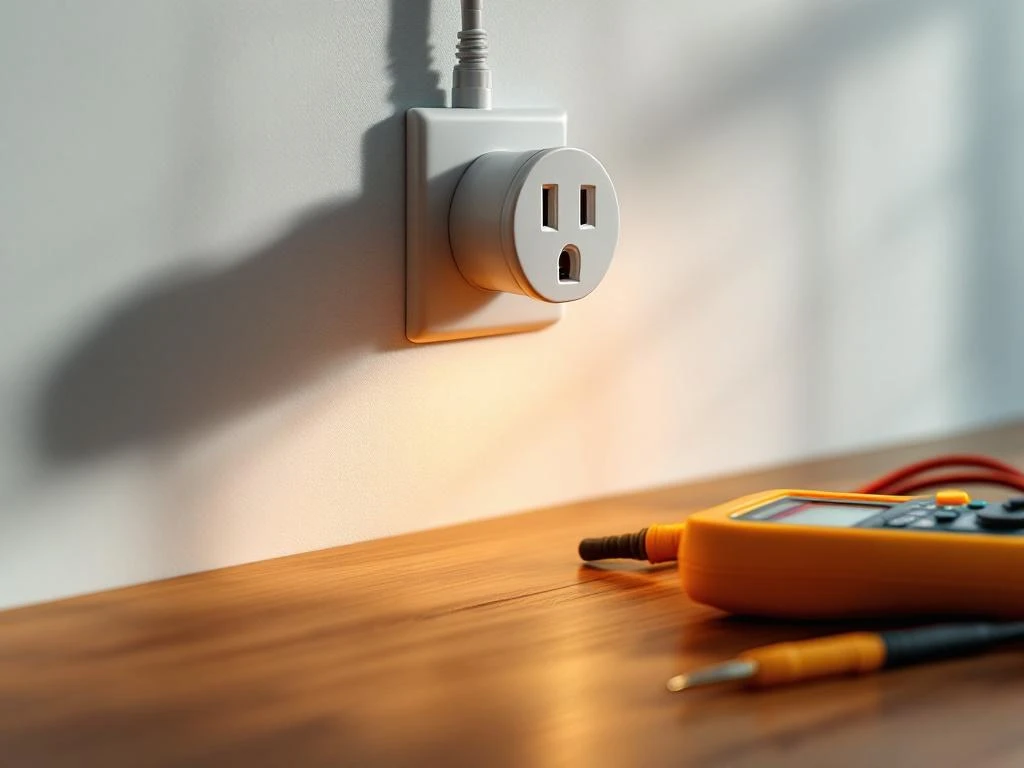
You can check if your electrical appliance is earthed by looking at the plug. An earthed appliance has a plug with three pins or connection points, with the third pin being the earth conductor. You can also recognize earthed appliances by symbols on the nameplate, and if you have a simple voltage tester, you can check that the earthing is working. For complete safety, we recommend that you contact an electrician who can make a professional measurement of the earthing.
What does it mean that an electrical appliance is earthed?
An earthed electrical appliance has a special safety connection that diverts fault current directly to earth if something goes wrong with the insulation. The grounding conductor is a protective conductor that connects the metal casing of the appliance to the ground electrode of your property's electrical system. This is a basic safety feature of modern electrical systems that protects you from electric shock.
When an appliance is operating normally, electric current flows through the phase conductor into the appliance and back through the neutral conductor. But if the insulation is damaged and a live part comes into contact with the metal casing of the appliance, an earth fault occurs. Without earthing, the metal casing would become live and you could receive a dangerous electric shock if you touch the appliance.
With proper grounding, the fault current is instead conducted through the earth conductor directly to earth. This allows the RCD to quickly detect the difference in current between the phase conductor and the neutral conductor and cut the current within milliseconds. In this way, the earth fault is diverted to earth instead of through your body, which can save lives.
How can I check myself if my appliance is earthed?
The simplest method is to look at the appliance plug. An earthed plug has three connection points instead of two. In Sweden, Schuko plugs with two round pins and two earthing clips on the sides, or plugs with three round pins where the middle one is the earthing pin, are usually used. Appliances with only two pins are not earthed.
You can also check the rating plate on the appliance. There you will find information on the class of the appliance. Class I appliances require earthing and usually have a symbol showing earthing. Class II appliances are double insulated and do not require earthing, which is usually indicated by a symbol showing a square inside another square.
If you have access to a simple voltage tester, you can check whether the metal casing of the appliance is connected to earth. However, to be absolutely sure that the earthing is working properly, you need professional equipment that measures the earth resistance. We recommend that you contact a qualified electrician if you are unsure or suspect a problem with the earthing.
Which appliances must be earthed and why?
All Class I appliances must be earthed according to electrical safety standards. This applies to appliances with a metal casing that can become live in the event of an insulation fault. Common examples in the home include washing machines, dishwashers, refrigerators, freezers, stoves, microwave ovens and electric boilers. These appliances have access to large amounts of power and are often used in humid environments, making earthing particularly important.
Tools and equipment with metal casings, such as drills, grinders and garden machinery, also need to be earthed. Computers and other electronic equipment with metal casings should also be earthed, both for your safety and to protect sensitive electronics from overvoltages.
However, there are Class II appliances that are double insulated and do not need earthing. These have an extra layer of insulation that provides the same protection as earthing. Examples include many hair dryers, chargers, lamps and small kitchen appliances. You can recognize them by the fact that they have connectors with only two pins and often a double square symbol on the nameplate. The double insulation means that there is no risk of the casing becoming live even if the internal insulation is damaged.
What happens if an appliance is not properly grounded?
Without proper grounding, there is a risk of electric shock if the appliance insulation is damaged. If a live part comes into contact with the metal casing, the whole appliance becomes live. When you touch it, electric current can flow through your body to earth, causing serious injury or death.
Inadequate earthing also increases the risk of fire. An undetected earth fault can cause sparking, overheating and, in the worst case, fire. This is particularly dangerous in older installations where earth leakage switches may be missing or where the earthing system has deteriorated over time.
The earth leakage circuit breaker serves as an important protection, but it does not replace proper earthing. The RCD measures the difference in current between the phase conductor and the neutral conductor. If this difference exceeds 30 milliamps (which means that current is leaking somewhere else, for example through a person), it cuts the current. But for the RCD to work optimally, the appliance needs to be properly earthed so that the fault current is actually dissipated.
This is particularly important in humid environments such as bathrooms and kitchens. Water conducts electricity well, so the risk of electrical accidents increases dramatically in these environments. Therefore, it is imperative that appliances such as washing machines, dishwashers and electric heaters in bathrooms are properly earthed and protected by RCDs.
When should I contact an electrician to check the earthing?
You should contact an electrician immediately if you feel a slight shock or tingling when you touch an electrical appliance. This is a clear sign that something is wrong with the grounding or insulation. Even if the shocks feel small, they may indicate a serious safety issue that needs to be addressed.
If your RCD trips repeatedly for no apparent reason, you need professional help. This may be due to problems with the earthing of one or more appliances, moisture ingress or other faults in the electrical system. Do not try to rewire the RCD several times without fixing the cause.
If you live in an older property with installations from before the 1990s, we recommend a regular electrical safety inspection. Older installations may have inadequate earthing or lack earth leakage switches altogether. The earthing system may also have deteriorated over time due to corrosion or other factors.
At 24 Center, we offer professional earthing and electrical safety checks 24 hours a day, 7 days a year. Our qualified electricians can measure the earth resistance, check that all appliances are connected correctly and fix any problems. If you are experiencing problems with electric shocks, tripped circuit breakers or are unsure about the safety of your installation, contact us on 08 40 24 240. We have a local presence throughout Sweden and can quickly help you with both emergency problems and planned inspections.
Regular electrical safety inspections are important to ensure that your electrical safety is working properly. A professional electrician can detect problems before they become dangerous and advise you on possible improvements to your electrical system.