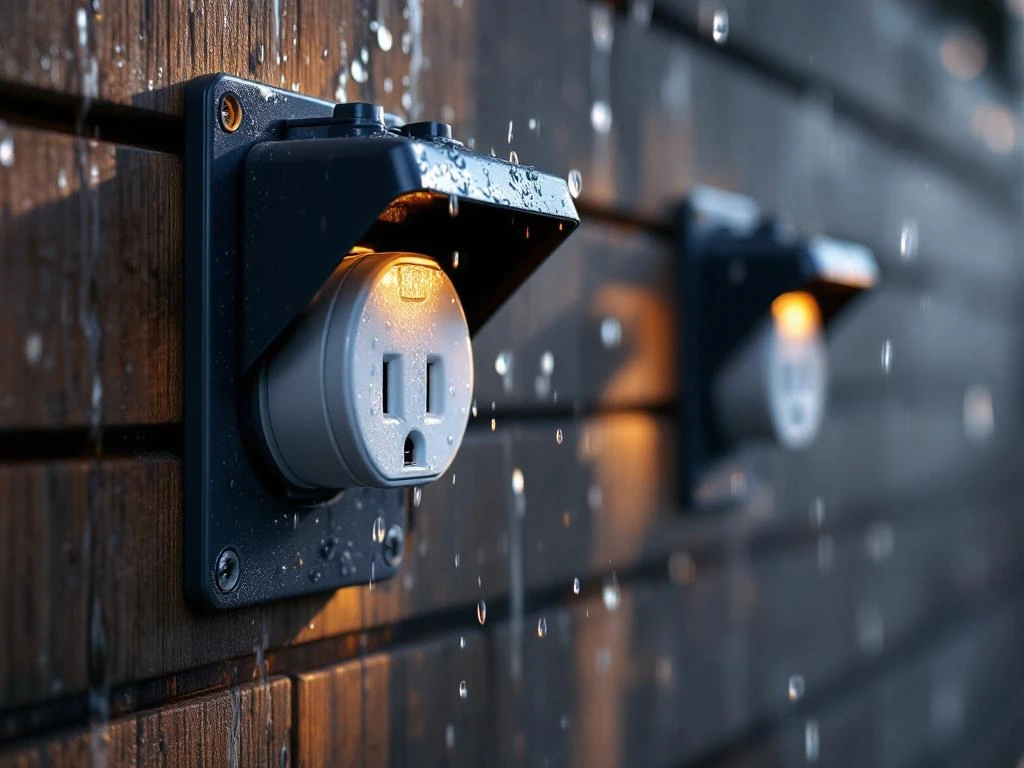
To protect outdoor electrical outlets from the weather, you need weatherproof electrical outlets with the right IP rating, earth fault protection and proper installation. Key protection methods include tight covers with rubber seals, protective enclosures and strategic placement under overhangs. The correct IP rating varies depending on exposure - IP44 is sufficient for sheltered areas while IP65 is required for more exposed locations.
What does IP rating mean for outdoor power outlets and which one do you need?
The IP rating indicates how well an electrical outlet is protected against dust and water by two numbers. The first number (0-6) indicates protection against solid particles, while the second (0-8) indicates water protection. For outdoor sockets, IP44 is the minimum for sheltered locations and IP65 for exposed locations.
IP44 means protection against objects larger than 1 mm and splashing water from all directions. This is sufficient for electrical outlets under roof overhangs or on sheltered verandas. IP65 offers dust protection and protection against water jets, suitable for fully exposed locations such as garden areas.
IP67 provides even better protection and can withstand temporary immersion in water. You need this rating near pools, fountains or areas that may be temporarily flooded. Always check that the socket is labeled with the correct IP rating before installing outdoors.
What types of protection are available for outdoor sockets against rain and moisture?
There are several effective protection methods for outdoor electrical outlets. Tight covers with spring-loaded lids and rubber seals provide basic protection against rain and moisture. Plastic or metal enclosures offer extra protection for sockets in highly exposed locations.
Rubber seals around the outlet prevent water from entering behind the fitting. These need to be changed regularly as rubber becomes brittle from UV radiation and temperature changes. Check the seals at least once a year.
Overhangs and eaves provide natural protection against rain from above but do not protect against wind-driven precipitation or splash water. Therefore, always combine overhangs with tight covers for best results. Place outlets at least 60 cm from ground level to avoid splashing water.
Why is earth fault protection important for outdoor electrical outlets?
Residual current devices (RCDs/RCBOs) cut off power within milliseconds if there is a leakage current to earth. This protection is vital outdoors where moisture dramatically increases the risk of electrical accidents. Without RCD/RCBO protection, faulty appliances or damaged cables can cause fatal electric shocks.
Earth fault protection works by comparing the current going out with that coming back. At the slightest difference, often as low as 30 milliamps, the circuit is immediately broken. This protects both people and property from electrical damage.
In humid outdoor environments, the insulation of cables and appliances can gradually deteriorate. Earth leakage protection detects these small leakage currents before they become dangerous. All outdoor sockets must therefore be connected via earth leakage protection according to Swedish electricity law.
How do you install safe outdoor electrical outlets according to the regulations?
Safe installation of outdoor electrical outlets requires careful planning and following the electricity law. Outlets should be placed at least 60 cm from ground level and 2 meters from pool edges. Outdoor electrical installation requires a licensed electrician for safety and insurance coverage.
Installation starts with planning the cabling from the fuse box to the socket. The cable must be approved for burial or routed in conduit. The digging depth should be at least 50 cm with warning tape 25 cm above the cable.
The outlet is mounted in a weatherproof enclosure with the correct IP rating. Earth fault protection is installed in the fuse box and tested to ensure functionality. Finally, the installation must be inspected and approved according to current regulations.
How we help with outdoor electrical safety
We offer professional electrician services for safe outdoor installations around the clock. Our qualified electricians handle everything from installing weatherproof sockets to advanced security systems and earth fault protection.
Our home electrical safety services include:
- Installation of IP rated outdoor power sockets
- Earth fault protection and safety checks
- Wiring and conduit
- Inspection and approval of installations
- Emergency troubleshooting and repairs
With our local network of specialists, we can quickly get out and help you with both emergency electrical problems and planned installations. We understand that electrical safety can't wait, which is why we offer 24/7 service with a short response time.
Contact us on 08 40 24 240 for immediate assistance or visit our website for planned installations. We ensure that your outdoor installation complies with all safety regulations and provides you with safe use in any weather.
Frequently asked questions
How often should I check and maintain my outdoor electrical outlets?
Check outdoor electrical outlets at least twice a year, preferably before and after the winter season. Inspect rubber seals for cracks, test the earth fault protection by pressing the test button, and clean the sockets from dirt and leaves. Replace rubber seals every 3-5 years or when they become brittle.
Can I use standard extension cords outdoors?
No, standard indoor extension cords are not safe for outdoor use. Use only extension cords labeled for outdoor use with IP44 or higher rating. They should have thick, flexible cables that can withstand temperature changes and UV radiation. Always unplug extension cords when not in use.
How much does it cost to install a new outdoor socket?
The cost varies depending on the distance from the fuse box and the complexity of the installation, but expect to pay between SEK 3000-8000 including materials and labor. Factors that affect the price are cabling, excavation work, type of socket and whether earth fault protection needs to be installed. Always request a quote from an authorized electrician.
Can I replace an existing outdoor socket outlet with one with a higher IP rating myself?
No, all outdoor electrical installations must be carried out by an authorized electrician according to Swedish electricity law. This also applies to the replacement of sockets, as this affects safety and is required for insurance cover. Incorrect installation can lead to electrical accidents and invalid home insurance.
Do outdoor power sockets work in winter when it is below freezing?
Yes, quality outdoor sockets with the right IP rating will work in sub-zero temperatures. Choose sockets labeled for the temperature range -25°C to +60°C. Avoid plugging in appliances when the socket is frozen, and allow condensation to drain before use after snow melt.
How far from the house can I place an outdoor socket?
There is no fixed limit, but longer distances increase the cost and complexity. For distances over 20 meters, thicker cables and extra protective measures are often needed. Consult an electrician to calculate the correct cable size and ensure that the voltage drop is not too high.
What should I do if the earth leakage protection trips frequently for my outdoor electrical outlet?
Frequent trips may be due to moisture ingress, faulty appliances or wear and tear on cables. Unplug all appliances and test if the problem persists. If the RCD still trips without a load, contact an electrician immediately - it could be a serious safety issue that requires professional troubleshooting.