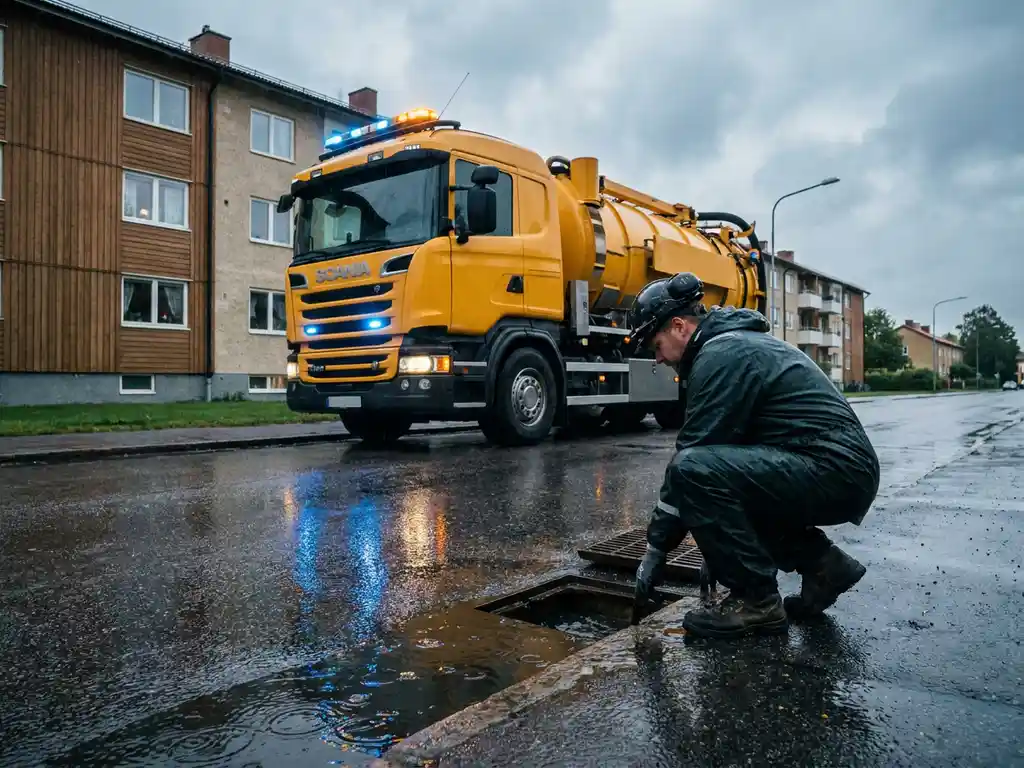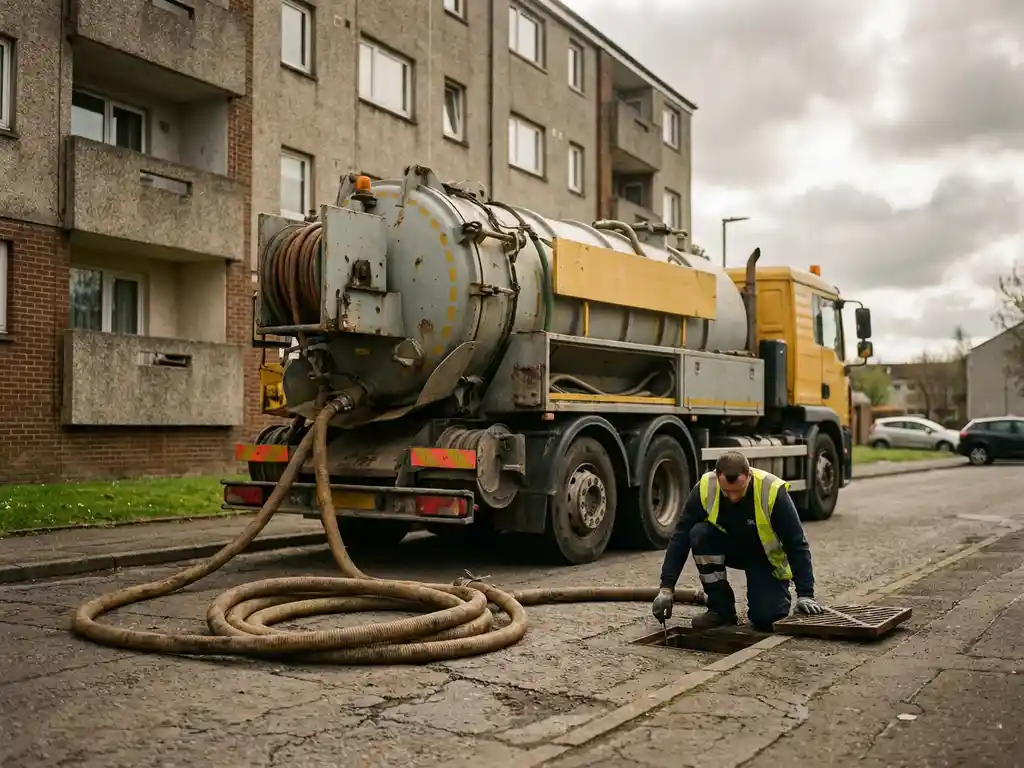
Storm drain cleaning involves regularly clearing away leaves, sediment and debris that accumulate in the drain. This prevents flooding and ensures that rainwater can drain away effectively from roads and properties. Cleaning is usually done 1-2 times a year using simple tools such as a shovel and bucket.
What is a stormwater drain and why does it need cleaning?
A stormwater well is a buried structure that collects rainwater from roads, parking lots and properties. The well acts as a first station where the water is filtered before it is directed to municipal sewer systems or natural water bodies.
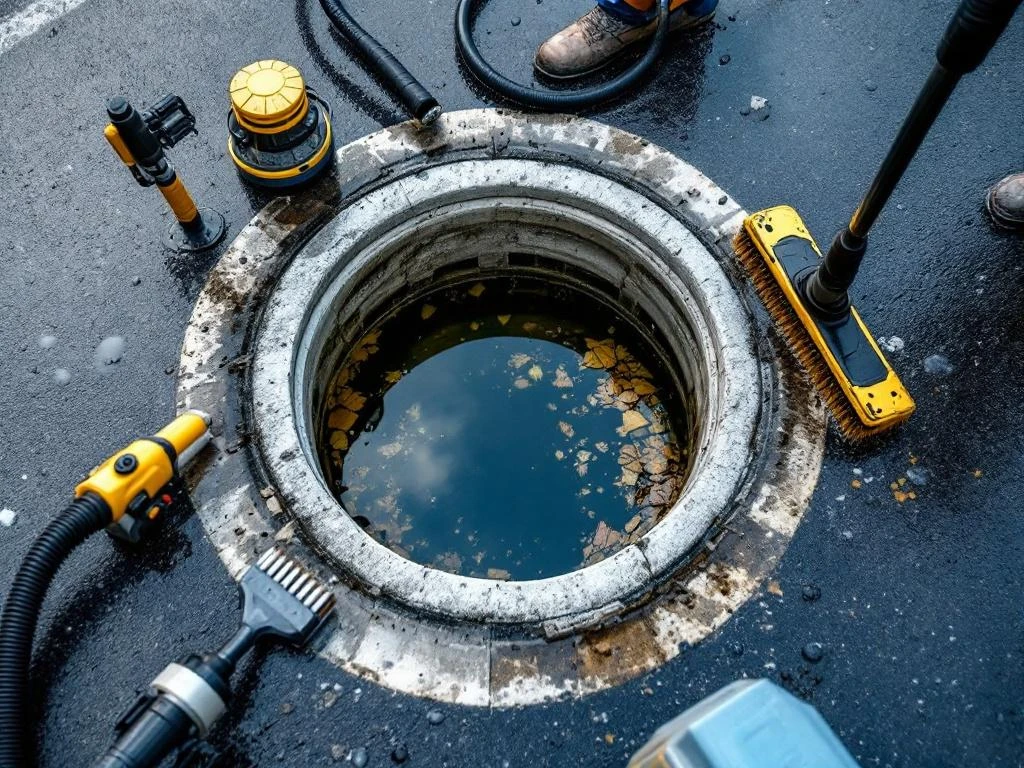
Stormwater drains naturally collect leaves, sand, gravel and other debris washed away by rainwater. Over the year, layers of sediment build up at the bottom of the well. When too much material accumulates, the well becomes less efficient and, in the worst case, can become completely blocked.
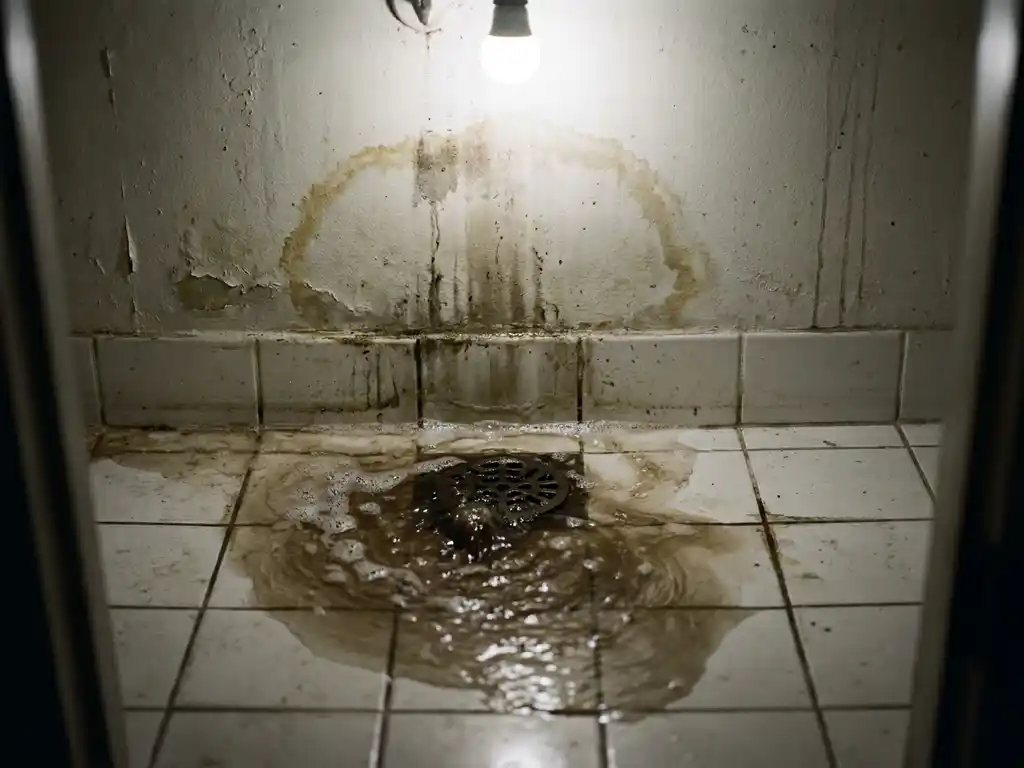
Poor maintenance of stormwater drains leads to several problems. Flooding occurs when water cannot drain away properly. This can damage property and create dangerous traffic situations. The environmental impact is also greater when pollutants are not filtered out before the water reaches natural water bodies.
How often should you clean your stormwater drain?
Most storm drains should be cleaned 1-2 times a year for optimal performance. The best times are late spring after leaf fall and early fall before winter.
The frequency of cleaning is affected by several local factors. Wells near many trees need to be cleaned more often because of leaves and twigs. Areas with high traffic intensity collect more sand and gravel from the roads. Sites with a lot of construction activity get more construction dust and pebbles.
Check your storm drain after heavy rains or storms. If water remains around the manhole for a long time or overflows, it's time for cleaning. During dry periods, you can also look down the manhole to assess how much sediment has accumulated.
What tools and equipment are needed to clean stormwater drains?
Basic equipment for storm drain cleaning includes a shovel, bucket, protective gloves and rubber boots. You'll also need tools to lift off manhole covers and possibly a flashlight to see better.
For more effective cleaning, a pressure washer can be used to flush the walls and bottom of the well. A suction pump or wet vacuum cleaner helps to remove water and loose sediment. Longer tools such as rakes with handles make it easier to reach the bottom without climbing down.
Safety precautions are important in all storm drain servicing. Always wear protective gloves and avoid breathing dust from dried sediment. Have someone nearby when working and wear a reflective vest if the manhole is near traffic. Check that manhole covers can be lifted safely before you start.
How to clean a stormwater drain step by step?
The cleaning process begins with safety preparations and careful removal of the manhole cover. Then, water and sediment are systematically sucked up from the bottom to the top of the well.
Start by securing the area around the well and putting on protective equipment. Carefully remove the well cap with appropriate tools - many caps are heavy and require two people. Check the well with a torch to assess the amount of sediment and water.
Suck or scoop up standing water from the well with a bucket or pump. Then scoop up sediment and debris from the bottom. Work systematically from the bottom up to get all the material. Finally, flush the walls of the well with a pressure washer or water hose.
Check that the drain at the bottom is free of blockages before finishing. Replace the manhole cover properly so that it lies flat and secure. Transport all absorbed material away to a suitable recycling station or compost.
What should be considered for the safety of stormwater drain cleaning?
Safety risks in stormwater well maintenance include toxic gases, risk of falling and contact with contaminated water. These risks require proper protective equipment and precautions throughout the work.
Toxic gases can accumulate in deep wells, especially on hot days. Always ventilate the well by leaving it open for a while before cleaning. Never climb into deep wells without proper safety equipment and training.
Always wear protective gloves, rubber boots and appropriate clothing to protect against contaminated water. Wash hands and equipment thoroughly after work. Avoid touching your face while cleaning.
Professional help should be called for deep wells over 1.5 meters, wells with suspected dangerous contaminants or when special equipment is needed. Also contact professionals if the well has structural damage or if cleaning does not solve poor drainage problems.
How 24 centers help with storm drain cleaning
We offer professional storm drain service with specialized equipment and experienced technicians that ensure safe and effective cleaning. Our services include:
- Complete cleaning with powerful suction pump and pressure washer
- Safety procedures for deep wells and hazardous environments
- Checking the construction and functioning of the well
- Environmentally friendly management of vacuumed material
- Preventive maintenance planning for optimal performance
We are available 24/7 for emergency problems with flooding or blocked storm drains. Our local technicians are familiar with the specific challenges of the area and can quickly solve both emergency problems and planned maintenance work.
Contact us at 24center on 08 40 24 240 for immediate assistance with storm drain cleaning, or book a visit online for scheduled maintenance of your drains and manholes.
Frequently asked questions
How much does it cost to hire professional storm drain cleaning?
The cost varies depending on the size of the well, its accessibility and the degree of contamination, but is usually between €1 500-4 000 per well. Deep wells or those requiring specialized equipment may cost more. Contact us for a free quote based on your specific needs.
Can I clean the stormwater drain myself even if it is deeper than 1.5 meters?
We strongly recommend not going down wells deeper than 1.5 meters without professional equipment and training. The risk of oxygen depletion and toxic gases increases significantly at depth. Instead, use long tools or hire professional help for safe cleaning.
What happens if I find oil spills or chemicals in the stormwater drain?
Stop cleaning immediately and contact the municipal environmental department or emergency services. Do not touch contaminated material without protective equipment. Document the situation with photos if possible. Professional decontamination is required to handle hazardous substances safely and according to environmental legislation.
How do I know if my stormwater drain has structural problems that need to be addressed?
Signs of structural problems include cracks in the well walls, an unstable or damaged lid, or the well sinking/sloping. If water continues to stand after cleaning, the sewer line may be damaged. Contact a professional for inspection if you notice such problems.
Can I compost the sediment and leaves from the stormwater drain?
Leaves and natural organic matter can usually be composted, but road sediments often contain oil, salt and heavy metals that should not be composted. Contact your municipality for guidelines on waste management. Many recycling centers accept stormwater sediment for safe treatment.
What should I do if the stormwater drain floods in the middle of a rain?
Immediately contact a professional emergency service such as 24 center on 08 40 24 240. Do not attempt to clean up during flooding due to safety risks. Document damage for insurance purposes and stay away from flooded areas until the water recedes.
Do I need a permit to clean the stormwater drain on my property?
Basic cleaning of stormwater drains on your own property does not usually require a permit. However, major maintenance work or structural changes may require a building permit. Contact your municipality to clarify the rules in your area, especially for manholes near public land.