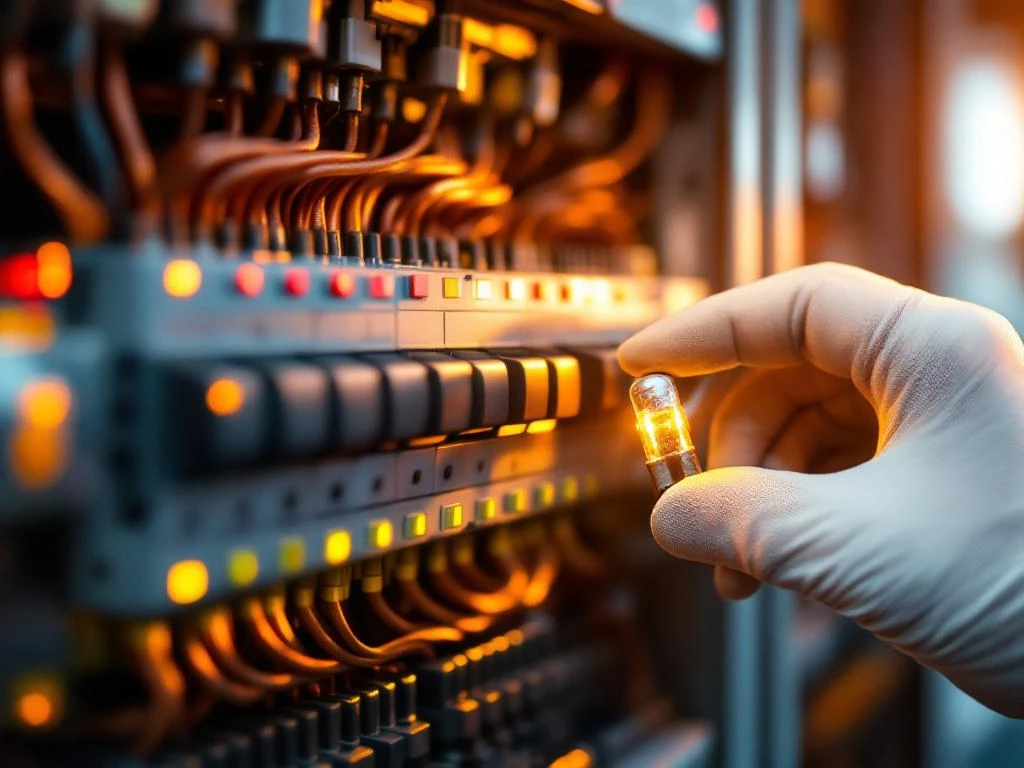
Fuses do not normally need to be replaced routinely, only when they break or show signs of wear. Modern automatic fuses can last for decades, while older plug fuses may need to be replaced every 10–15 years. Fuses protect your electrical installation from overload and short circuits, so it is important to check them regularly for visible damage or frequent tripping.
What are fuses and why do they need to be replaced?
Fuses are safety devices that protect your home's electrical installations against dangerous overloads and short circuits. They act as a weak link in the electrical system that breaks when the current becomes too strong, preventing damage to appliances and reducing the risk of fire.
There are two main types of fuses in Swedish homes. Older fuse boxes from the 1960s–1980s contain a metal wire that melts when overloaded and must be replaced after each trip. Modern automatic fuses can be reset by turning the switch back on and have a significantly longer service life.
Fuses need to be replaced when they can no longer perform their protective function correctly. This may be due to age-related wear of internal components, corrosion in the fuse box, or mechanical damage from repeated tripping. Although automatic fuses are more durable, their internal mechanics can deteriorate over time.
How often should you actually change the fuses in your home?
Automatic fuses usually do not need to be replaced until after 20–30 years or when they show signs of failure. Plug fuses, on the other hand, should be inspected every 10–15 years and replaced if the metal wire looks corroded or if the porcelain housing has cracks.
The replacement interval is affected by several factors. Fuses that trip frequently due to overload wear out faster than those that are rarely activated. Damp environments, such as basements, can cause corrosion that shortens the service life. The quality of the fuses also plays a role—cheap fuses do not last as long as brand-name products.
To determine when replacement is necessary, inspect the fuse box annually. Look for visible damage, check that all fuses are securely in place, and note if any are tripping unusually often. This is particularly important in older properties where the electrical installations may be under greater strain than they were originally designed for.
What signs indicate that a fuse needs to be replaced?
The clearest warning sign is frequent tripping without any apparent reason. If a fuse trips repeatedly despite normal load, the internal mechanics may be damaged and the fuse should be replaced by a qualified electrician.
Visible signs include cracks in the fuse housing, corrosion or discoloration around the contacts, and loose connections that cause the fuse to fit poorly in the socket. For plug fuses, a melted or corroded metal wire is a clear sign that replacement is needed.
Other warning signs include electrical problems in the home, such as flickering lights, appliances that do not reach full power, or strange noises coming from the fuse box. These symptoms may indicate that the fuses no longer provide reliable protection for your electrical installations and electrical safety in the home.
If you notice a burning smell coming from the fuse box or see signs of overheating, contact an electrician immediately. This could indicate serious electrical faults that require professional assessment of the safety of the entire electrical system.
What happens if you don't change the fuses in time?
Defective fuses cannot protect your electrical installations properly, creating serious safety risks. A fuse that does not trip in the event of an overload can cause cables to overheat, significantly increasing the risk of electrical fires.
Electrical appliances can be permanently damaged if they are not protected against voltage fluctuations and overloads. Expensive household appliances such as refrigerators, washing machines, and electronics are particularly sensitive to electrical disturbances that functioning fuses normally filter out.
Old or broken fuses can also cause intermittent electrical faults that are difficult to diagnose. This can lead to an unreliable power supply where appliances stop working unexpectedly, which is both frustrating and potentially dangerous for safety electronics such as alarms and smoke detectors.
Insurance companies may also refuse to cover fire damage if it turns out that faulty fuses were the cause, as this is considered to be a failure to maintain the electrical safety of the property.
How 24 Center assists with security work
We offer professional electrical services for all types of fuse work, from emergency electrical faults to planned fuse box upgrades. Our qualified electricians have extensive experience with both old fuse boxes and modern automatic systems.
Our security services include:
- Emergency fuse replacement in the event of a power failure
- Upgrading from fuse links to automatic fuses
- Inspection and testing of fuse boxes
- Installation of earth fault circuit breakers for increased safety
- Troubleshooting frequent fuse trips
- Repair of corroded or damaged fuse holders
We understand that electrical problems rarely occur at convenient times, which is why we offer round-the-clock service with a short response time. Our local technicians are familiar with the specific challenges of Swedish buildings and can quickly identify problems with both older and modern electrical installations.
Ring 020 74 24 70 för omedelbar hjälp vid akuta säkringsproblem, eller boka online för planerade kontroller och uppgraderingar av ditt hems elsäkerhet.
Frequently asked questions
Can I replace fuses myself, or do I always need to call an electrician?
You can replace fuse links yourself, but all other fuse work should be carried out by a qualified electrician. Working with automatic fuses, fuse boxes, or installing new fuses requires electrical knowledge and must comply with Swedish law on qualification requirements for electrical work.
How much does it cost to switch from fuse links to automatic circuit breakers?
The cost varies depending on the size of your home and the existing installation, but you can expect to pay between SEK 15,000 and SEK 35,000 for a complete upgrade. This includes new automatic fuses, earth fault circuit breakers, and any necessary updates to the fuse box to meet modern safety requirements.
How do I know which amperage to choose when buying new fuse links?
Always check the marking on the old fuse or the electrical diagram for your property. Common values are 10A for lighting, 16A for sockets, and 20-25A for cookers. Never use a higher amperage than the installation is designed for, as this can create a fire hazard.
What should I do if the same fuse trips several times a week?
Frequent tripping indicates an overload or fault in the electrical system. First, check whether you have too many appliances connected to the same circuit. If the problem persists after reducing the load, immediately contact an electrician to troubleshoot any cable faults or defective appliances.
Is it safe to keep fuse links from the 1970s?
Fuse boxes from the 1970s can still work safely if they're in good shape, but they don't have modern safety features like ground fault circuit interrupters. Think about upgrading to circuit breakers for better protection against electrical accidents, especially in bathrooms and kitchens where the risk of ground fault currents is higher.
What is the difference between B, C, and D characteristics on automatic fuses?
B characteristics (3-5 times rated current) are used for lighting and standard outlets, C characteristics (5-10 times) for motor loads such as refrigerators and washing machines, while D characteristics (10-20 times) are used for heavy starting currents. The wrong type can cause unnecessary tripping or inadequate protection.