
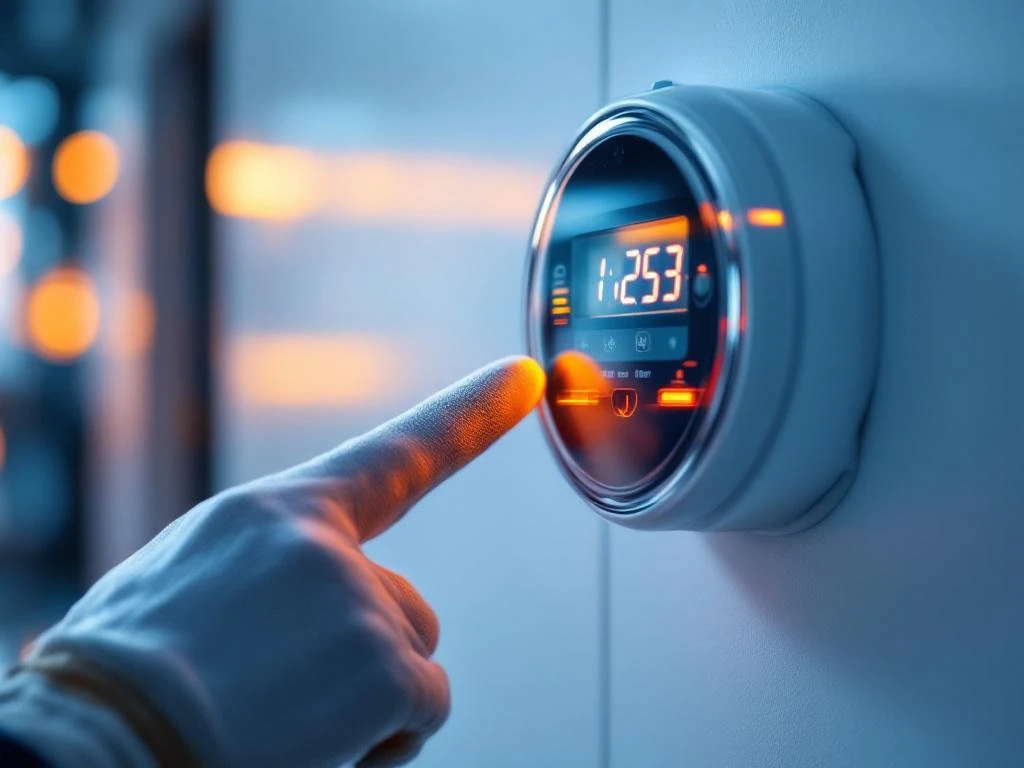
Reading your electricity meter correctly means taking note of the numbers that show your total electricity consumption in kilowatt-hours (kWh). On analog meters, you read the numbers from left to right, while digital meters show the kWh value clearly on the display. Correct electricity meter reading helps you control your electricity bill and track your energy consumption at home.
What is the difference between analogue and digital electricity meters?
Analog electricity meters have rotating dials that show consumption mechanically, while digital meters use electronic displays with clear numbers. Analog meters require you to read several digit wheels from left to right, while digital ones show the kWh value directly on the screen.
Analog electricity meters are recognized by their characteristic rotating wheels with numbers 0-9. When you use electricity, the wheels spin and count up the consumption. These meters usually have 4-6 digit wheels and show total consumption since installation.
Digital electricity meters have an LCD or LED display that shows different values. They can switch between showing current power, total consumption and sometimes different tariff zones. Many modern digital meters have buttons to navigate between different displays and can also send data automatically to the electricity company.
Where can I find the electricity meter in my home?
The electricity meter is usually located in the electricity distribution center, basement, technical rooms or in an external meter cabinet. In houses, it is often located in the basement or garage, while apartments may have common meter spaces in the stairwell or basement.
In villas, look for the electricity meter in these common locations:
- Electrical panel in hall, kitchen or technical room
- Basement near the main fuses
- Garage or carport
- External meter cabinet on facade
In apartments and terraced houses, the electricity meter is often located in common areas such as basements or stairwells. Each apartment has its own meter marked with the apartment number. Contact your landlord or housing association if you have difficulty finding your specific meter.
How do I read the numbers on an analog electricity meter?
On analog electricity meters, read the numbers from left to right and note the number that each wheel shows most clearly. If a digit is between two numbers, always choose the lower value. Ignore decimals and red numbers that show tenths of kWh.
Here is how to proceed when reading analog electricity meters:
- Stand straight in front of the meter for best visibility
- Read each number wheel from left to right
- Select the number to which the pointer points closest
- If in doubt between two numbers, choose the lower one
- Write down all the numbers in the correct order
Remember to read only the black or white numbers. Red numbers or numbers after a comma indicate decimals that you do not normally need to report to your electricity company when setting your meter.
What do all the numbers and symbols on a digital electricity meter mean?
Digital elmätare visar kWh-värdet som huvudinformation, ofta märkt ”kWh” eller ”Wh”. Displayen kan också visa aktuell effekt i watt, olika tariffzoner (hög/låg) och tid. Använd knapparna på mätaren för att växla mellan olika visningar.
Common symbols and values on digital meters:
- kWh - Total consumption (the main value you should read)
- W or kW - Current power consumption at the moment
- HT/LT - High tariff/Low tariff for time-controlled billing
- Clock icon - Shows the current time
- Arrow symbols - Import/export of electricity (for photovoltaics)
För att navigera trycker du på knappen märkt ”Display” eller liknande. Mätaren växlar automatiskt mellan olika visningar, så vänta tills du ser kWh-värdet. Detta är siffran du behöver för din elräkning kontroll och rapportering till elbolaget.
What are the common errors made when reading the electricity meter?
The most common errors when reading electricity meters are reading the wrong numbers on analog meters, confusing kWh with actual wattage, or reporting decimals that are not needed. Many people also read the meter in poor light or from the wrong angle.
Avoid these common mistakes:
- Reading the hands between two digits without selecting the lower one
- Include red decimal digits in the reading
- Confuse current wattage consumption with total kWh
- Reading the meter from the side instead of straight ahead
- Forgetting to switch to kWh display on digital meter
- Report only one tariff zone when both are needed
To avoid errors, take the time to read the meter in good light and check the numbers twice. Photograph the meter so you have proof of the reading and can double-check later if necessary.
How 24 Center helps with electricity meter problems
At 24 Center, we offer professional electrician services around the clock when you encounter meter problems or need help with electrical installations. Our qualified electricians handle everything from troubleshooting malfunctioning meters to installing new meters and security systems.
Our services in the field of electricity metering include:
- Troubleshooting electricity meters showing strange values
- Installation of new digital electricity meters
- Control of switchboards and fuses
- Installation of smart metering systems
- Repair of defective meter connections
- Safety inspection of electricity meter installations
With our local focus and extensive network of specialists, we are available throughout Sweden. Our technicians have in-depth knowledge of different electricity meter systems and can quickly identify and solve problems with your electricity meter.
Contact us on 08 40 24 240 for immediate help with electricity meter problems or book online for planned electrical work. We offer a reliable service with a short response time when you need professional help with your electricity meter or other electrical installations.
Frequently asked questions
How often should I read my electricity meter to keep track of my consumption?
It is recommended to read your electricity meter on a monthly basis to monitor your energy consumption and detect any anomalies early. Many electricity companies also require self-reading 1-4 times a year, so regular checking will help you be prepared and avoid estimated bills.
What should I do if my electricity meter shows unusually high or low values?
First, check that you are reading the right numbers and compare with previous readings to see the change over time. If the readings seem incorrect, contact your electricity network operator to report the problem. They can send a technician to check the meter's operation and calibration.
Can I replace my old analog electricity meter with a digital one myself?
No, electricity meter replacement may only be carried out by authorized personnel of the electricity network company or authorized electricians. The electricity meter is owned by the electricity network company and replacement requires special authorization and safety procedures. If you want to upgrade to a digital meter, contact your electricity network company.
How do I know if my electricity meter reading matches my electricity bill?
Compare your kWh reading with what is shown on your electricity bill under 'consumption' or 'meter reading'. Calculate the difference between the current and previous reading to see your actual consumption. If there are large discrepancies, contact your electricity company to check the billing basis.
What does it mean when my digital electricity meter flashes or displays error messages?
Flashing displays may indicate normal operation or data transmission, but constant error codes or blank displays may signal technical problems. Make a note of any error codes and contact the electricity company immediately, especially if you are also experiencing power cuts or other electrical problems in the home.
Do I need to read both HT and LT on my meter for time-controlled billing?
Yes, for time-of-use (two-tariff) billing, you must report both HT (high tariff/day) and LT (low tariff/night) values separately. These are usually displayed as different screens on digital meters. Both values are needed for correct billing as they have different prices per kWh.
What if I can't access my electricity meter or it is too high up?
If the meter is inaccessible or at an unsafe height, contact your landlord, housing association or electricity company. They can either give you access or take the reading for you. Never use unsafe methods such as chairs or ladders on your own - your safety is more important than the reading.


