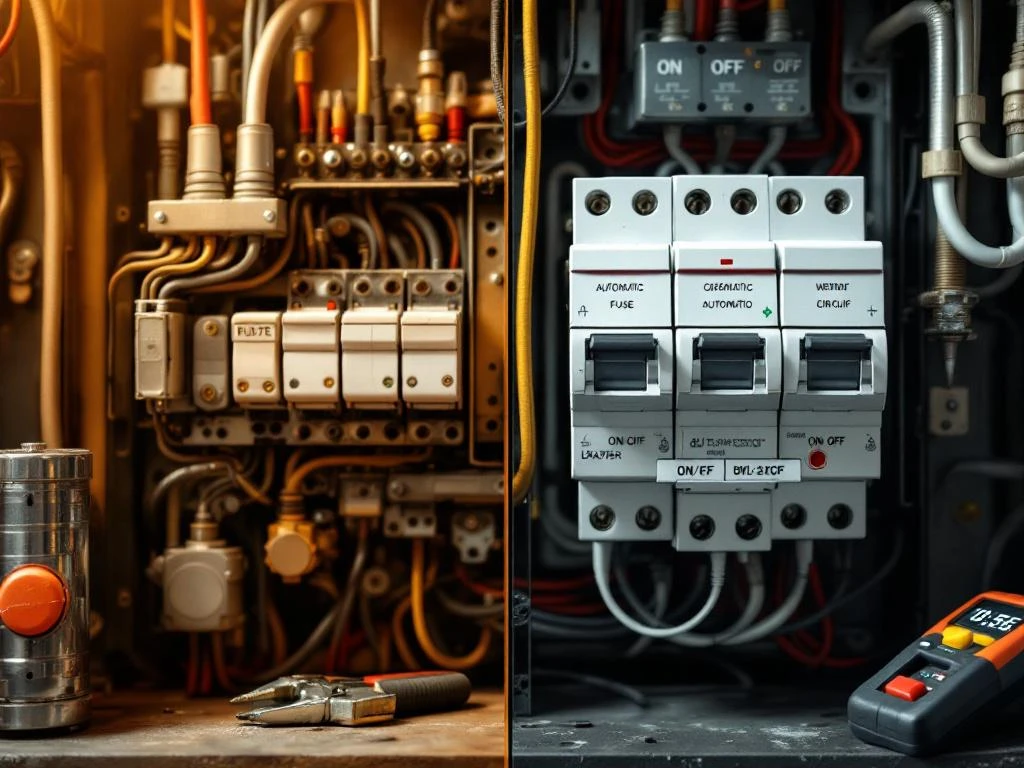
Switching from a plug to an automatic fuse is possible in most homes, but requires basic knowledge of electrical installation and safety regulations. Automatic fuses offer better safety and easier handling than older plug fuses. The change can be done by yourself in simple cases, but complicated switchboards require a professional electrician for safe installation and approved electrical work.
What is the difference between plug fuses and circuit breakers?
Plug fuses use a fuse wire that burns out when overloaded, while circuit breakers have a built-in switch mechanism that automatically turns off the power. Automatic fuses can be easily reset by pushing up the breaker, while plug fuses must be completely replaced when they trip.
Plug fuses are outdated technology that is no longer installed in new switchboards. They only react to overcurrents and provide limited protection against short circuits. Automatic fuses offer faster and more precise tripping in the event of electrical faults, reducing the risk of fires and electrical damage.
In terms of safety, circuit breakers are superior because they can be combined with earth leakage switches for complete electrical safety. They can also withstand repeated tripping without deteriorating, whereas plug fuses gradually lose effectiveness after each overload.
Can I switch from a plug fuse to an automatic fuse myself?
Simple fuse replacements can be done by yourself if you have basic electrical knowledge and the right tools. This applies when the fuse box is in good condition and only the plug fuses need to be replaced with automatic fuses of the same amperage.
Professional electricians are required when the electrical panel needs to be upgraded, grounding is missing or when new circuits are to be installed. According to the Electricity Act, major electrical work must be carried out by a qualified electrician and inspected. Safety risks include electric shock, fire and damage to the electrical system in case of incorrect installation.
Always check that the main power is switched off before starting work. If you are unsure about any step, contact a qualified electrician. The cost of professional installation is often justified compared to the risks of incorrect electrical work.
What tools and materials are needed to change fuses?
Basic tools include voltage testers, screwdrivers and wire cutters for safe handling of electrical components. You'll also need circuit breakers with the right amperage, usually 10A, 16A or 20A depending on the load of the circuit.
Necessary tools for the fuse replacement:
- Voltage tester to check that the power is off
- Insulated screwdrivers in different sizes
- Wire cutters for wiring work
- Flashlight for lighting in the switchboard
- Marking tape to identify circuits
Buy circuit breakers from well-known brands such as ABB, Schneider Electric or Siemens. Check that the fuses fit your switchboard and have the correct DIN rail mounting. Safety equipment such as insulated gloves and safety glass is highly recommended.
How to change the fuses step by step?
Turn off the main power by removing the main fuse or turning off the main switch. Use a voltage tester to check that the power is really off before continuing with the work.
Detailed review of the fuse replacement:
- Photograph the existing connection for reference
- Label all wires so you remember which one belongs where
- Unscrew the plug fuse holders from the DIN rail
- Disconnect the wires from the old fuse holders
- Install the circuit breakers on the DIN rail
- Connect the phase wire to the input of the circuit breaker
- Connect the output wire to the output of the circuit breaker
- Check all connections are properly tightened
- Turn on the main power and test each circuit
Test the operation of the circuit breakers by loading the circuits normally. Check that all sockets and lights work as expected after the change.
What does it cost to switch to automatic fuses?
Materials for the fuse replacement cost 200-500 SEK per fuse depending on the brand and type. Professional installation usually costs SEK 1500-3000 per fuse box, plus the cost of materials and any inspection.
Factors affecting the total cost:
- Number of fuses to be replaced
- Condition and age of the switchboard
- Need for earthing upgrades
- Installation of earth leakage circuit breakers
- Geographical location and accessibility
Long-term savings include reduced risk of electrical damage, easier troubleshooting and the ability to easily reset tripped fuses. Modern automatic fuses last significantly longer than plug fuses and require less maintenance over time.
How 24 Center helps with fuse replacement and electrical work
We offer professional electrician services for safe fuse replacements and electrical installations 24 hours a day, 7 days a year. Our qualified electricians handle everything from simple fuse replacements to complete electrical panel upgrades with expertise in safety technology.
Our fuse replacement services include:
- Assessment of existing switchboard and fuse system
- Installation of modern circuit breakers and earth leakage switches
- Upgrading entire substations for improved electrical safety
- Checking and testing of all electrical connections
- Documentation and certification of electrical work performed
With our local focus and extensive network of specialists, we are available throughout Sweden. Our technicians have in-depth knowledge of the local building stock and its specific electrical challenges, enabling us to provide accurate service and faster solutions.
Call 08 40 24 240 for immediate assistance with fuse replacement or contact 24 Center online for planned electrical installations. We prioritize your safety and deliver reliable solutions when you need them most.
Frequently asked questions
How do I know if my switchboard needs to be upgraded before the fuse change?
Check if your electrical panel is grounded, if the DIN rail is in good condition and if the main switch is working properly. Signs that an upgrade is needed include rust, loose connections, missing grounding or a switchboard older than 30 years. A qualified electrician should assess older switchboards before replacing fuses.
Can I combine plug fuses and circuit breakers in the same switchboard?
Yes, it is technically possible to have both plug fuses and circuit breakers in the same switchboard for a transitional period. However, it is recommended to replace all fuses at the same time for consistency and optimal safety. Mixed systems can make troubleshooting and maintenance difficult.
What happens if I select the wrong amperage on the circuit breaker?
Too high a current can cause wires to overheat without tripping the fuse, creating a fire hazard. Too low a current will cause the fuse to blow unnecessarily under normal load. Always use the same amperage as the original plug fuse or consult an electrician for assessment.
Do I need to notify the authorities of the fuse change?
Simple fuse changes where only plug fuses are replaced with automatic fuses of the same amperage do not usually need to be notified. However, if the switchboard is upgraded or new circuits are installed, notification and inspection are required. Contact your local electricity authority for specific requirements in your area.
How long do automatic fuses last compared to plug fuses?
Automatic fuses have a lifetime of 20-30 years in normal use and can withstand thousands of trips without deteriorating. Plug fuses need to be replaced every time they blow and gradually deteriorate even in the event of overloads that do not blow the fuse. This makes automatic fuses more cost-effective in the long term.
What common mistakes should I avoid when changing the fuse?
Avoid working with the power on, don't forget to label the wires before dismantling, and don't overtighten the screws which can damage the threads. Always check that connections are tight but not overtightened, and test the system thoroughly before finishing work.
Can I install earth leakage switches at the same time as replacing fuses?
Yes, it is an excellent time to install RCDs for improved electrical safety. However, this requires more extensive work and should be carried out by a qualified electrician. RCDs protect against electric shock and are mandatory in wet areas under modern electrical codes.