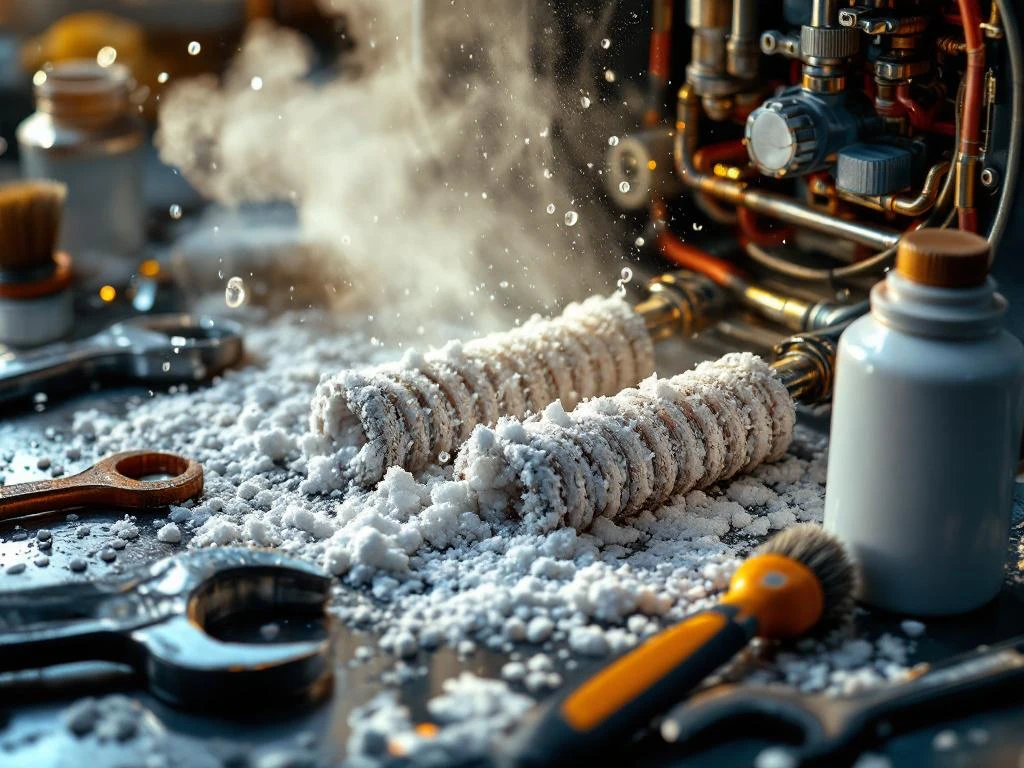
Descaling the water heater means removing limescale deposits that build up inside the system. Scale deposits reduce energy efficiency and can shorten the lifetime of the water heater. Regular descaling ensures optimal functioning and lower energy costs. Here are answers to the most frequently asked questions about water heater maintenance and when you need professional help.
Why does the water heater need to be descaled?
The water heater needs to be descaled because calcium and minerals in the water stick to the heating elements and the inside of the tank. These calcium deposits act as an insulation between the heat source and the water, making the heater work harder to heat the water. This leads to higher energy consumption and increased operating costs.
The hardness of your water affects how quickly limescale builds up. In areas with hard water, the build-up is faster, while soft water causes less problems. As limescale builds up, not only does energy efficiency decrease, but the heating elements themselves can also become damaged and need to be replaced prematurely.
Neglecting to descale your water heater can lead to several problems. You may notice that the hot water takes longer to heat up, that the amount of available hot water decreases, or that the boiler makes strange bubbling or popping noises. These noises occur when water gets trapped under the lime layers and boils. In the worst case, lime deposits can cause leaks or complete breakdown, which will be significantly more expensive than regular maintenance.
How often should the water heater be descaled?
You should descale water heaters at least once a year under normal conditions. If you live in a hard water area, it may be needed every two to three months. Households with high hot water consumption also need more frequent water heater maintenance than smaller households.
There are several signs that your boiler needs descaling. Reduced hot water is often the first sign, as limescale deposits take up space in the tank and reduce capacity. Strange noises such as popping, bubbling or hissing indicate that limescale has built up around the heating elements. Increased electricity bills without any other explanation may also indicate that the boiler is working inefficiently due to lime deposits.
To assess your specific situation, you can check water quality by asking your municipality about the water hardness in your area. High hardness values mean you need more frequent descaling. You can also look at your faucets and showers - if they quickly get limescale deposits, you probably have the same problem in the water heater. Some modern water heaters have indicators that show when descaling is needed, but most require you to keep track of maintenance intervals yourself.
Can I descale the water heater myself or do I need a plumber?
You can descale the boiler yourself if you have basic technical knowledge and the right equipment. Simpler water heaters with externally mounted heating elements are relatively uncomplicated to maintain. The process requires you to turn off the power, empty the tank, and use descaling agents according to the instructions. It takes a few hours but saves money compared to hiring a plumber.
However, there are situations where professional HVAC maintenance is recommended. If your boiler has internal heating elements that require the dismantling of several components, the work becomes more complex. Older systems or heaters with connections to heating systems often need specialized knowledge to avoid damage. Safety aspects are also important - working with electricity and water can be dangerous if you do not know what you are doing.
We recommend contacting a plumber if you are unsure about any step of the process, if the water heater has leaks or other problems in addition to limescale deposits, or if it is an expensive or complicated model where failures can be costly. A professional technician can also identify other maintenance needs and ensure that everything is working optimally after descaling. For routine maintenance on standard models, most people can do the job themselves with the right information and care.
What products and methods are used to descale the water heater?
The most common products for descaling water heaters are citric acid, vinegar and commercial descaling agents. Citric acid is effective and environmentally friendly, works well on most limescale deposits and does not damage metal parts when used correctly. Vinegar is a cheap alternative but can smell strong and often requires a longer exposure time. Commercial descaling products are specifically designed for plumbing systems and often give the fastest results.
The descaling process starts by turning off the power to the water heater and shutting off the water supply. Connect a hose to the tap and empty the tank completely. Mix the descaling agent according to the manufacturer's instructions - usually 100-200 grams of citric acid per liter of water, or commercial products according to the packaging. Fill the tank with the descaling solution and leave it to act for 2-4 hours depending on the degree of limescale build-up.
Safety measures are important throughout the process. Always check that the power is off before starting work. Wear protective gloves when handling descaling agents, especially commercial products that may be stronger. Ventilate the space well if you use vinegar. After the descaling solution has finished working, empty the tank completely and rinse through with clean water several times until all odors and residue are gone. Check all connections for leaks before turning the power back on. Proper descaling will extend the life of your water heater and keep energy consumption down.
Regular descaling is an investment that pays off in lower energy costs and longer life for your water heater. If you feel unsure about performing the maintenance yourself or encounter problems during the process, we are available for professional help. Contact us on 08 40 24 240 and we will help you with all types of plumbing maintenance and ensure that your water heater is working optimally.